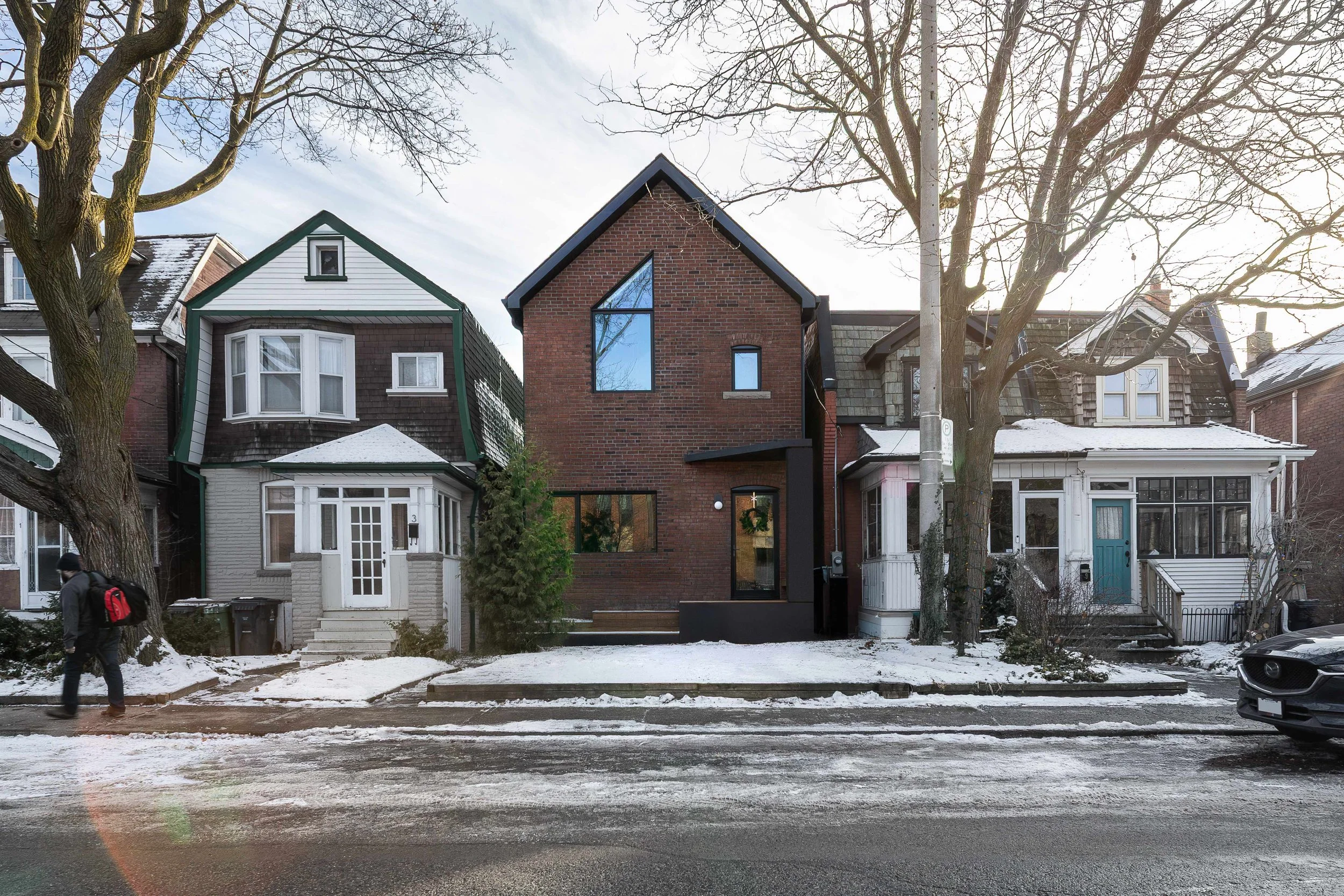
Junction Triangle House
Location
Toronto, ON
Year
2025
Size
2800 sq.ft
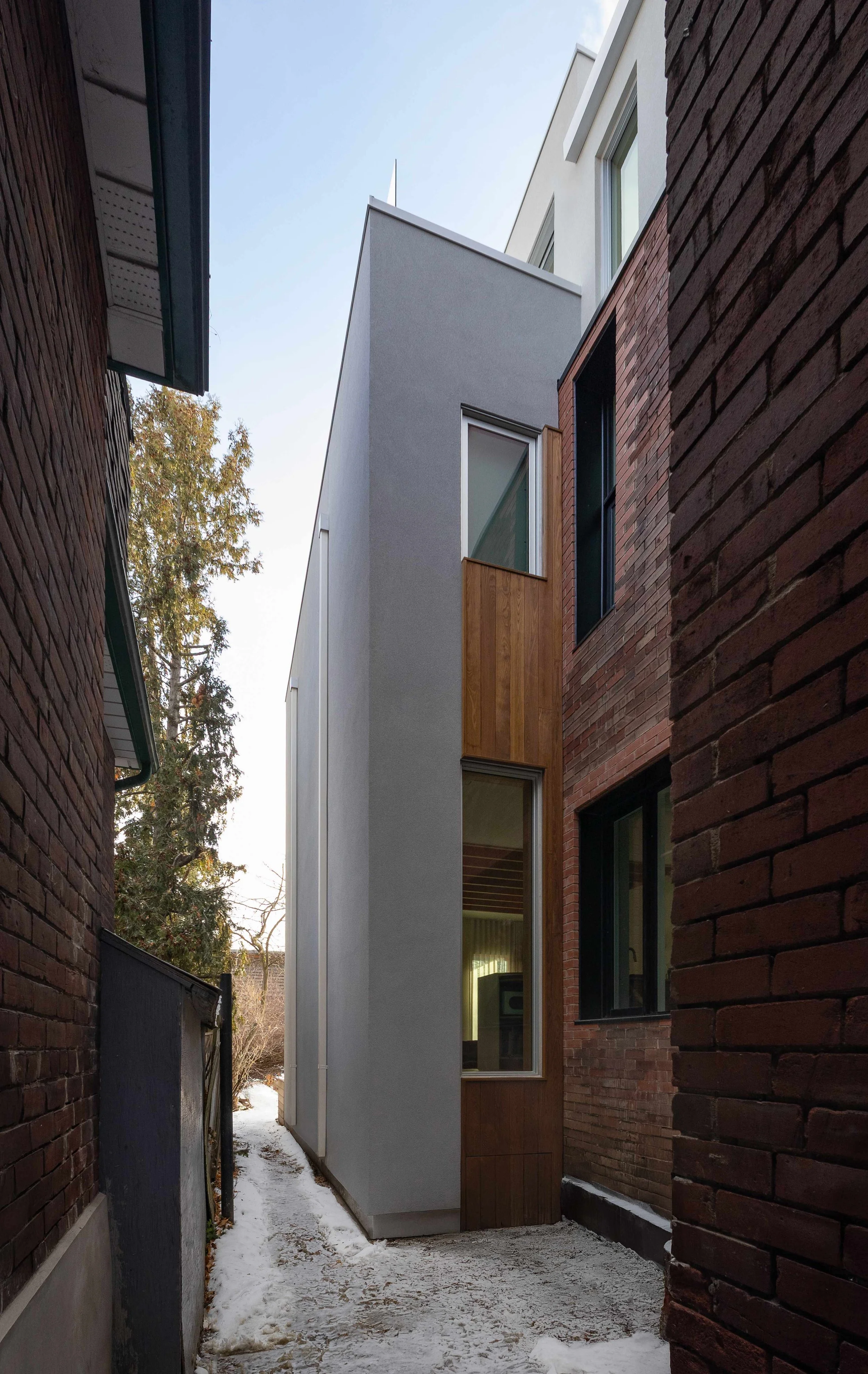
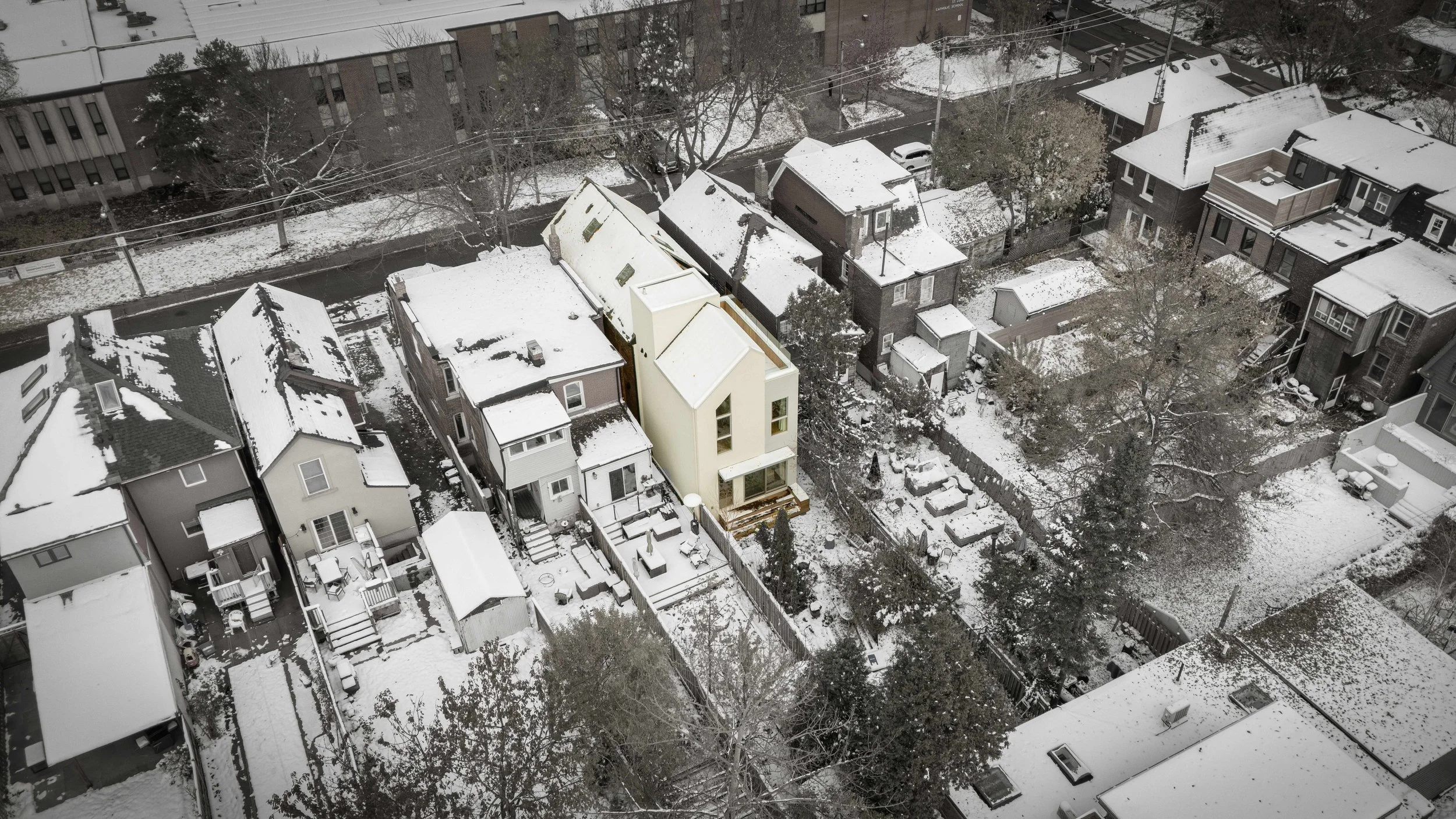
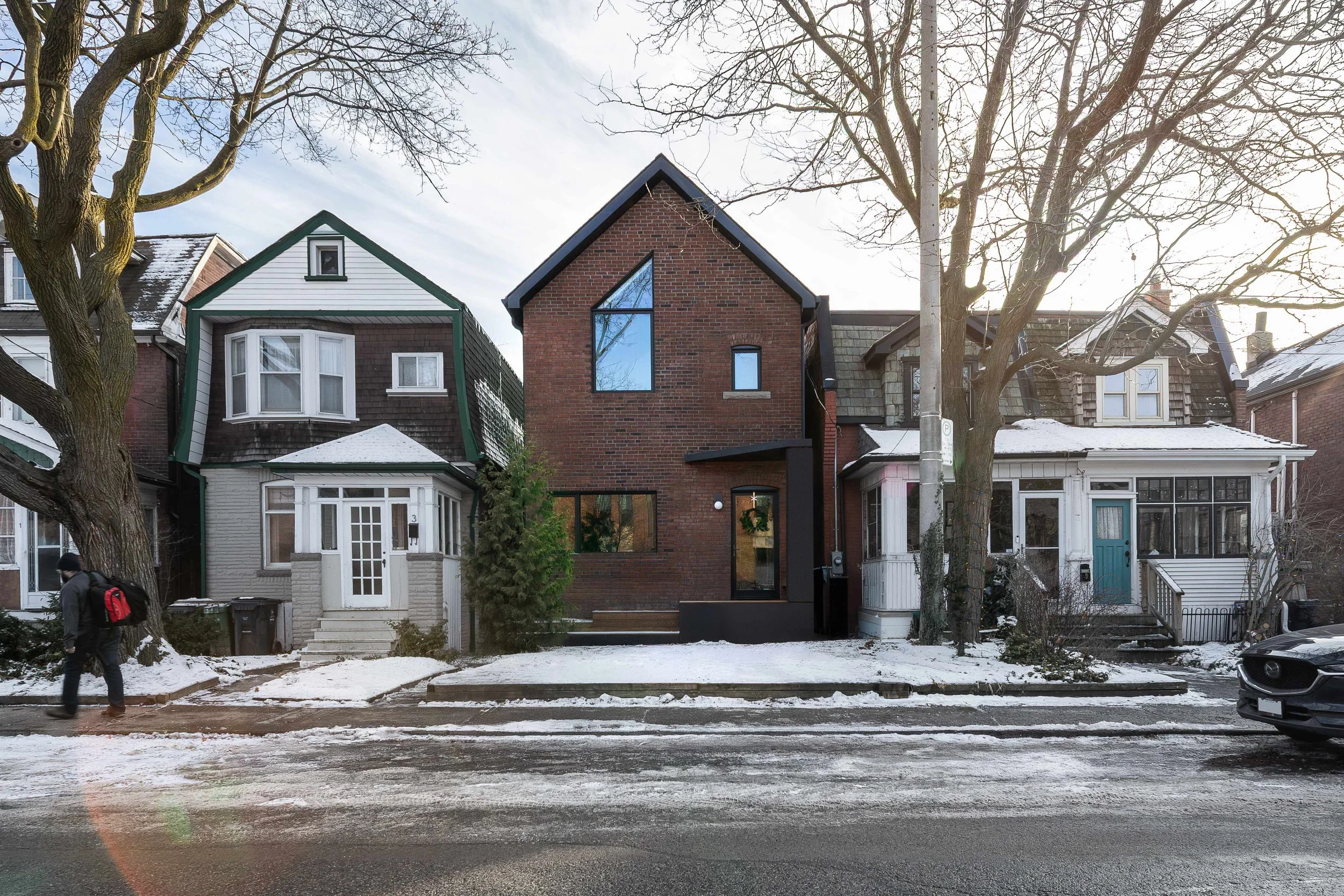
Junction Triangle House is a detached 19th-century residence, located on an unusually deep lot in Toronto’s vibrant Junction neighborhood. The original structure consisted of a primary two-storey main volume, a two-storey rear addition, and a one-storey front mudroom. A fairy tale-like garden, hidden from the street lacked any meaningful connection to the home’s interior. When the current homeowners purchased the property, the house was already in bad shape and continued to deteriorate with its infrastructure outdated, and its spatial organization unsuited to contemporary family life.
The owners, committed to staying long-term in the neighborhood, envisioned a warm, family-oriented home that would evolve with them over decades. With extended family on both sides, visiting aging parents, and a lifestyle centered around hosting and gathering, the brief called for a complete renovation, the addition of new living space, and a full reconfiguration of the internal layout to reflect the needs of modern family life.
The design embraces contrast and dialogue - separation and connection, compression and openness, light and shadow. The home was reimagined as a series of different zones for cooking, gathering, working, and resting. Careful attention was paid to creating surprising transitions, intimate moments, and a tactile, sensory journey through space - all while respecting the original structure’s heritage and enhancing its livability.
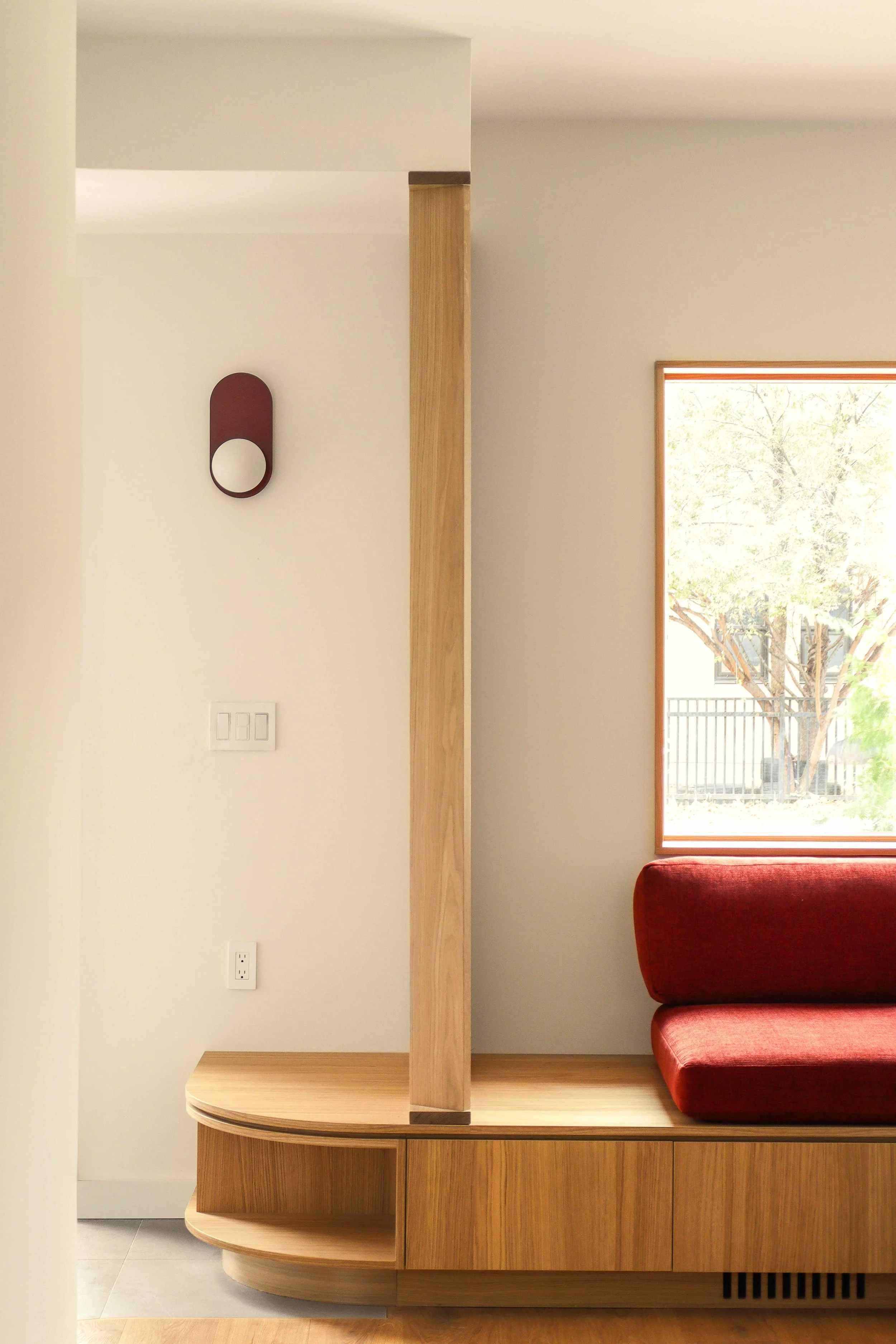
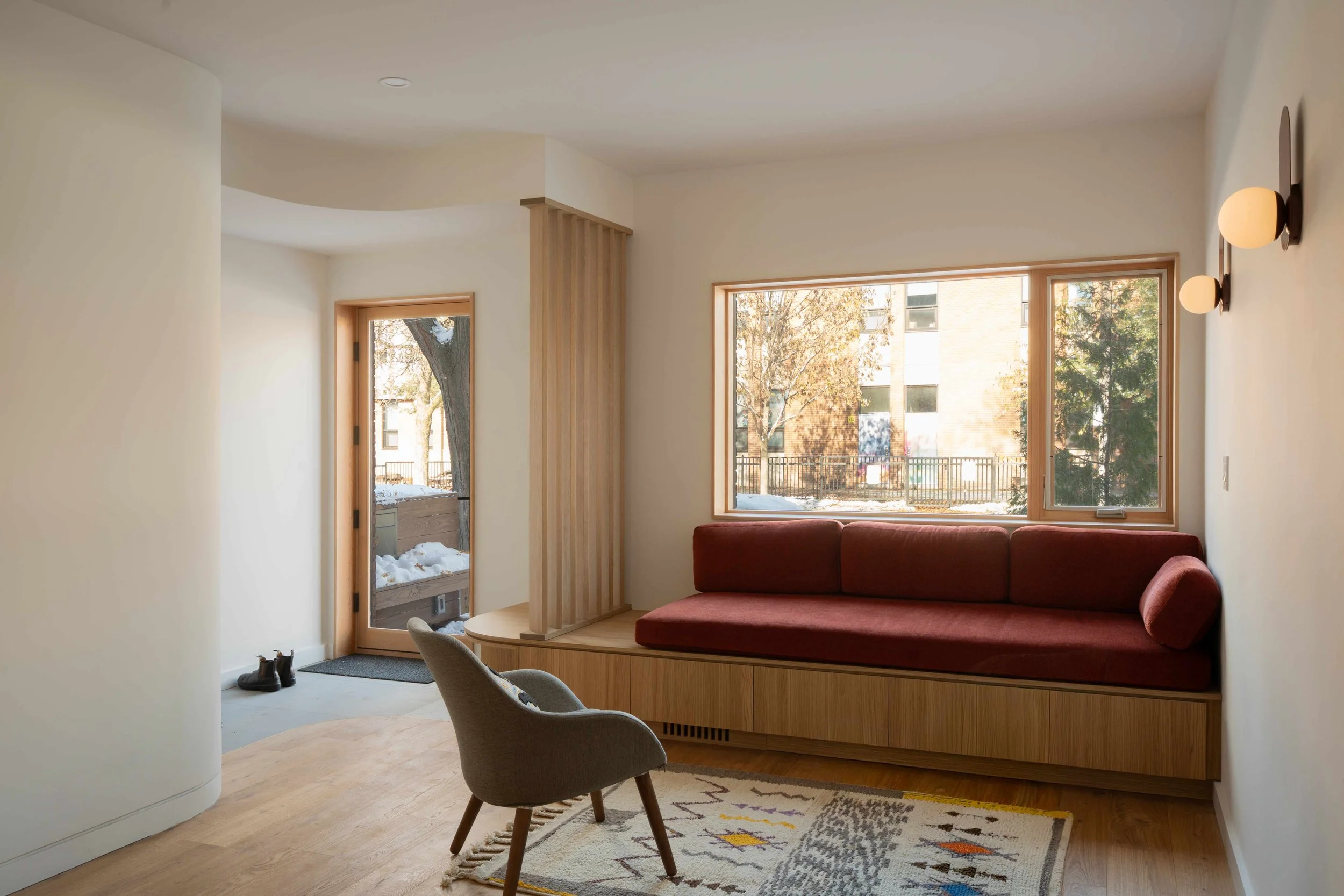
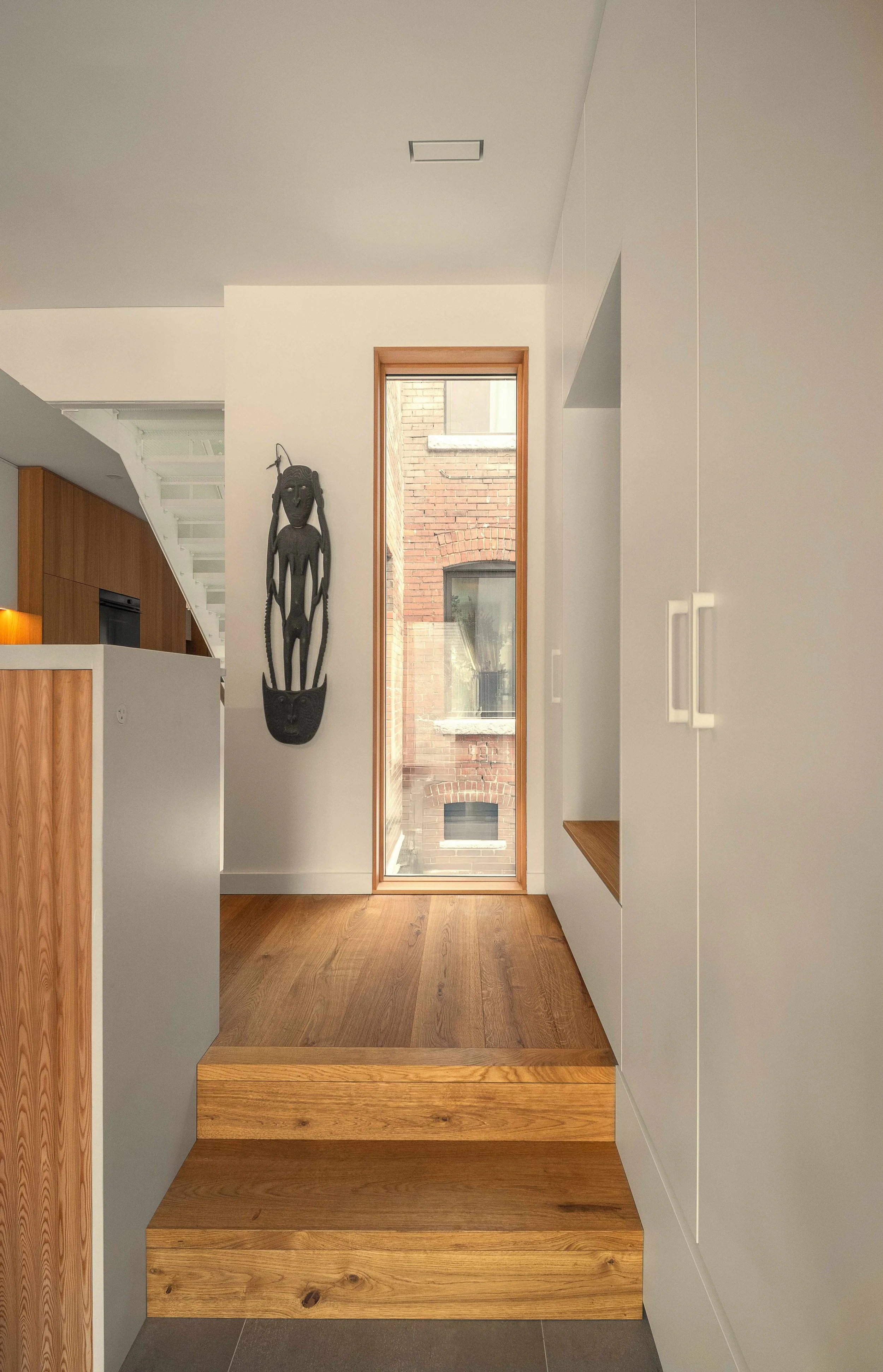
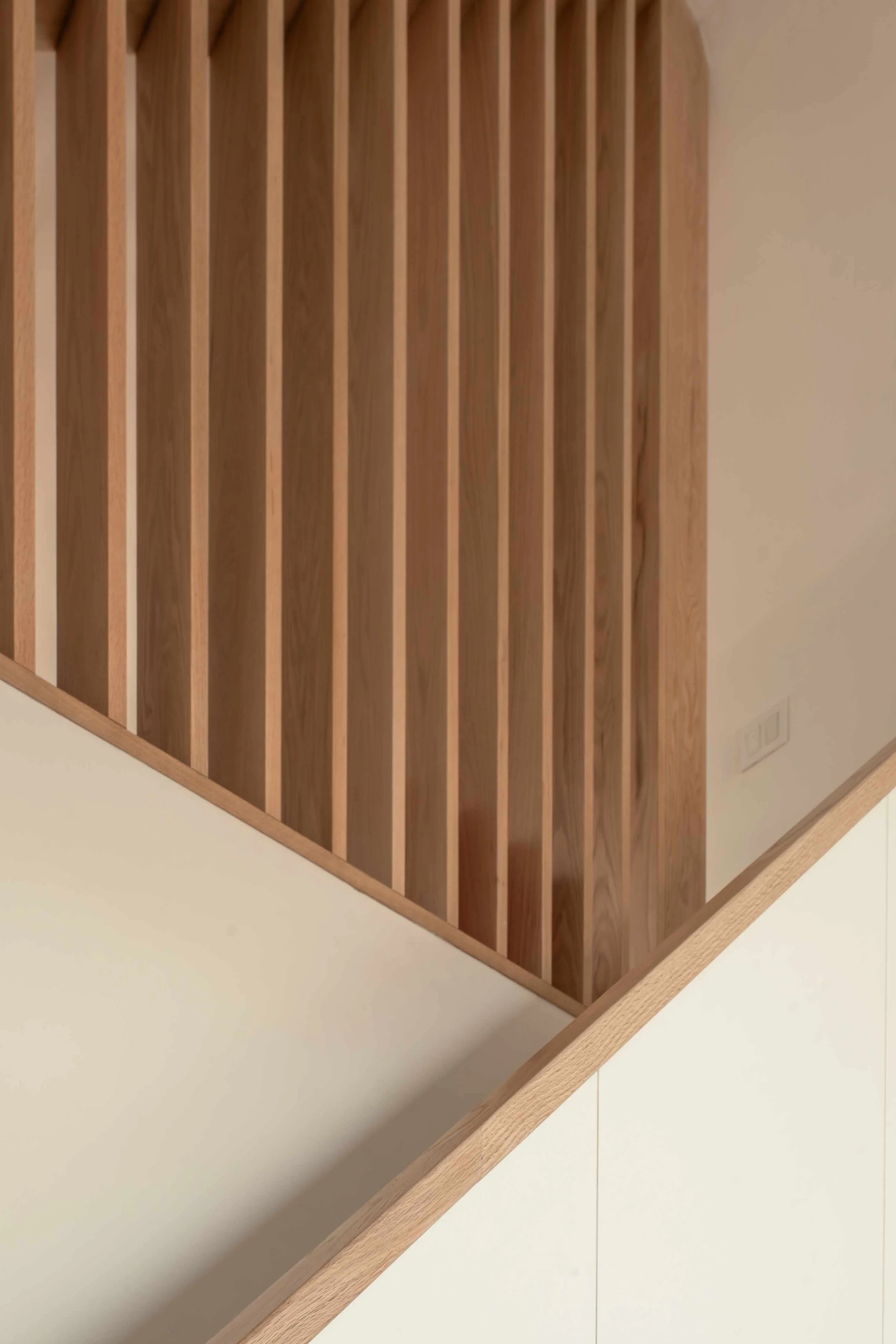
The ground floor is divided into two distinct but fluid zones. At the entrance, a compact foyer with built-in seating filters views into the house through vertical wooden louvers. Tucked away coat and shoe storage, along with a discreet powder room, offer practical convenience.
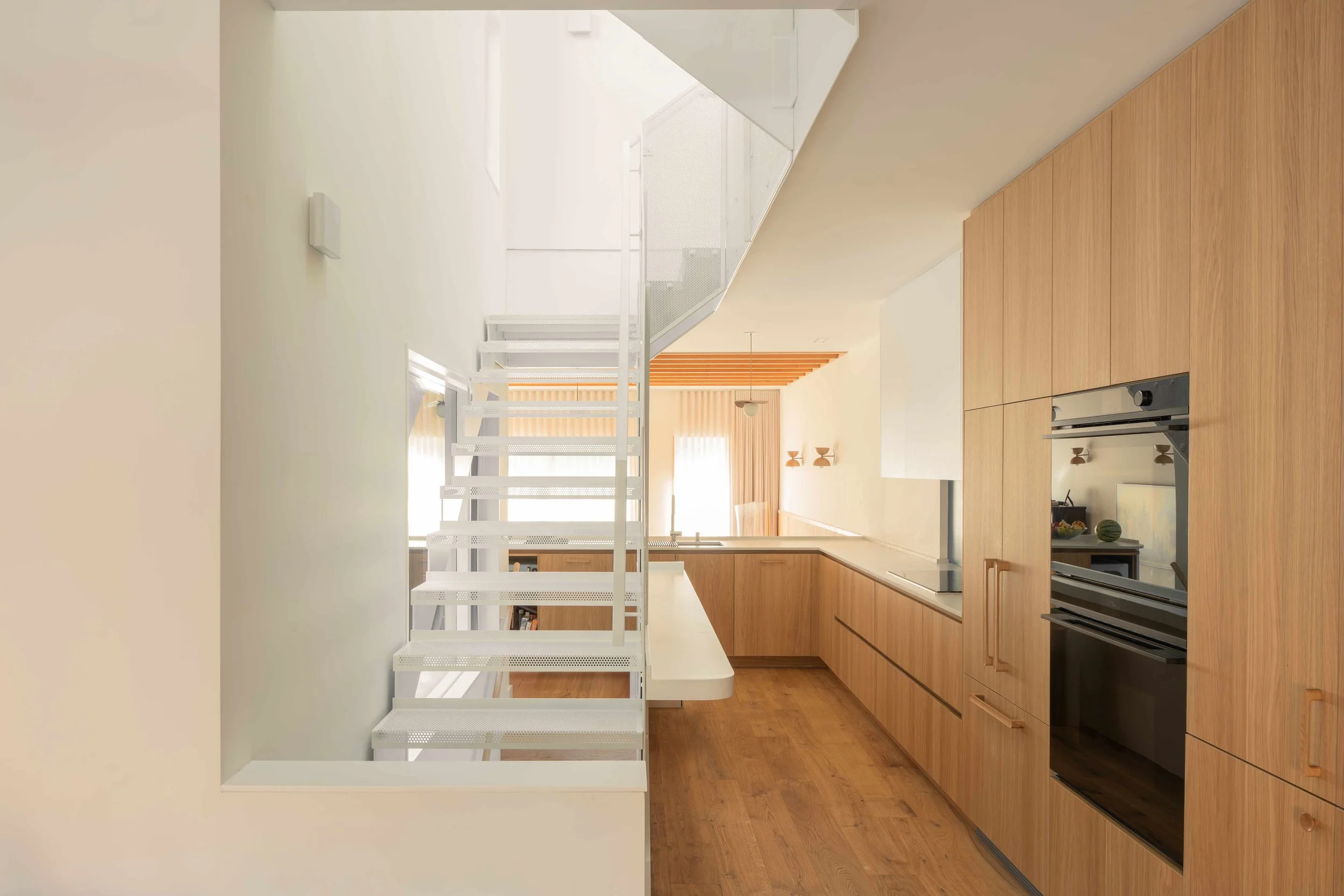
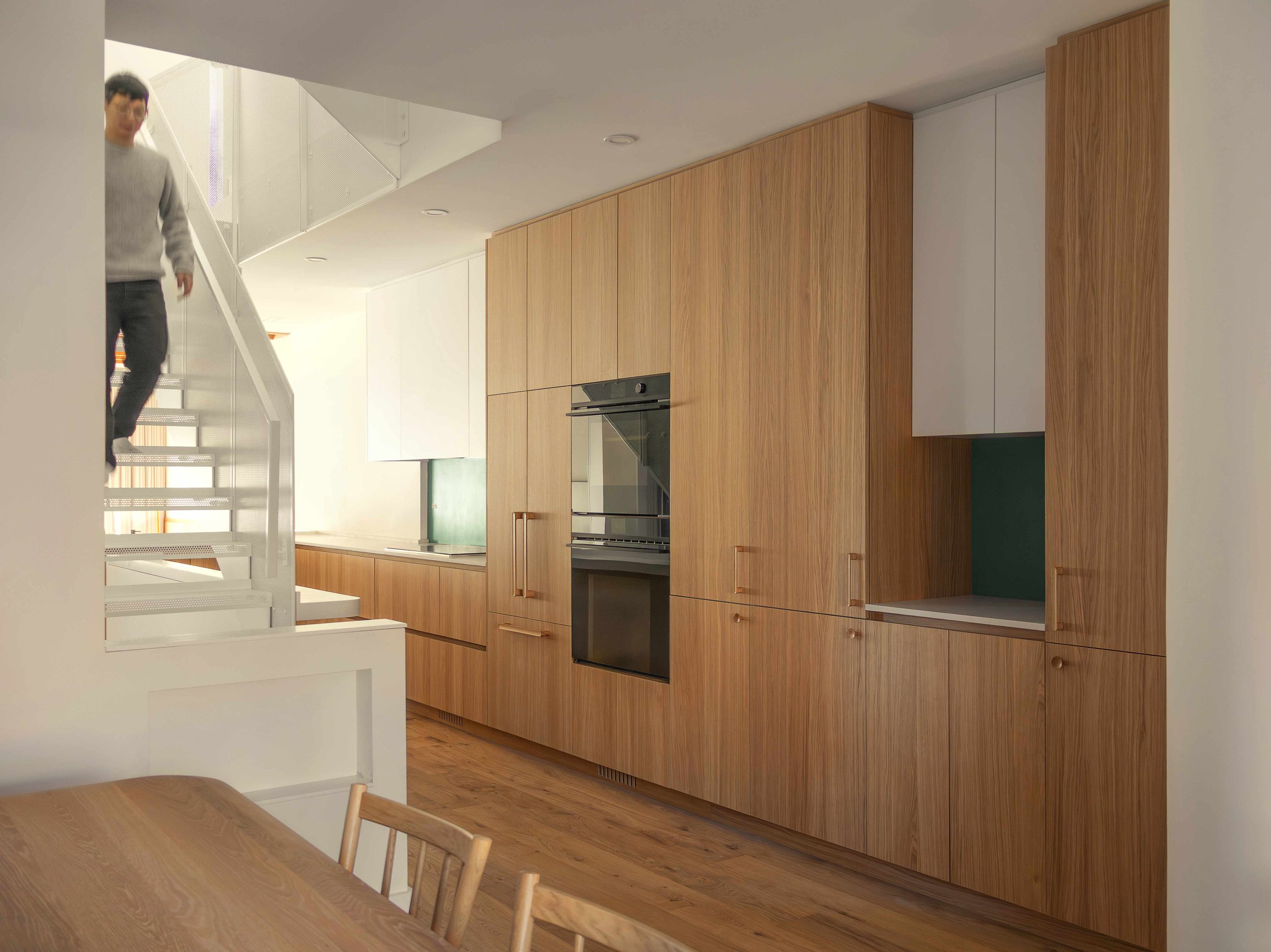
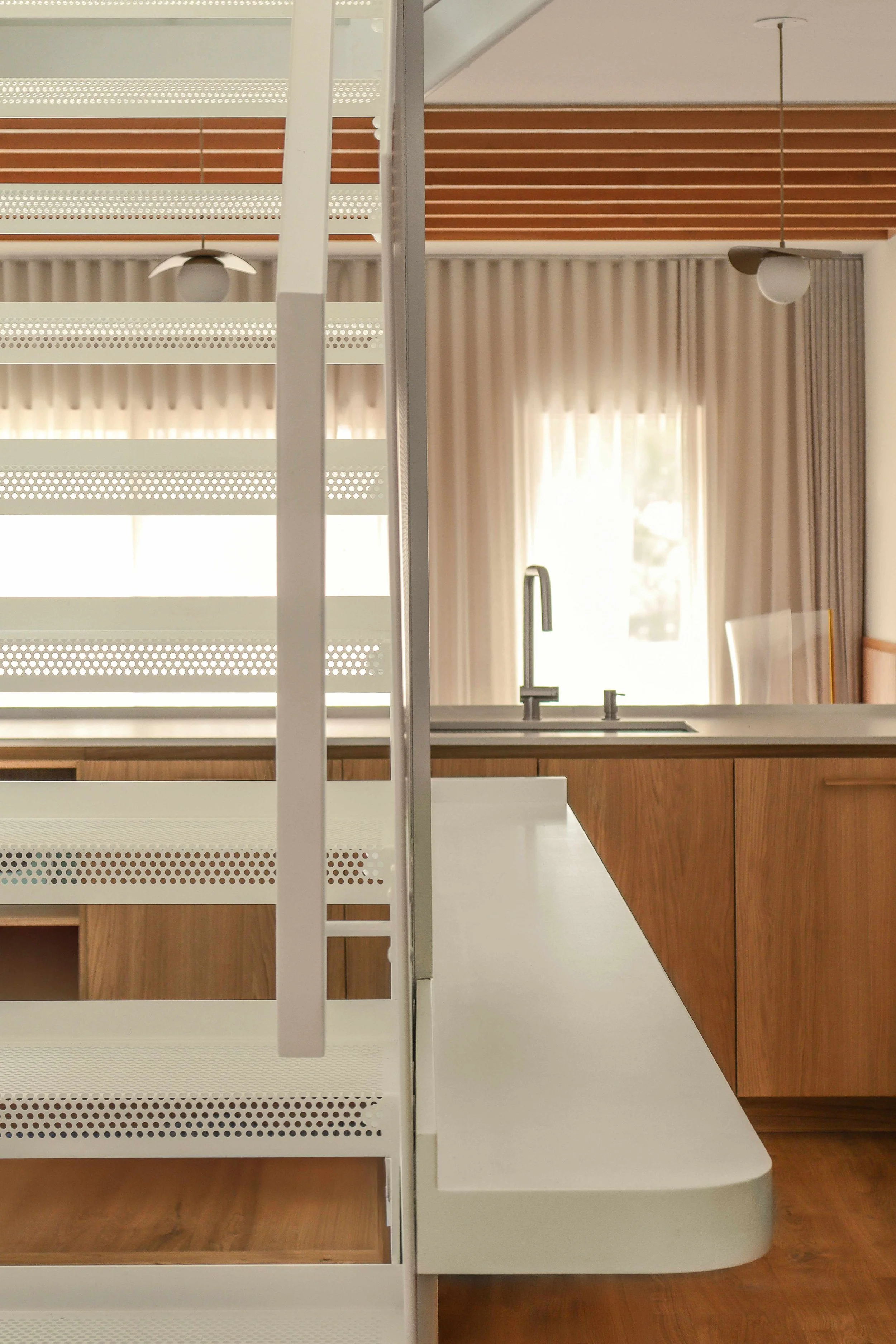
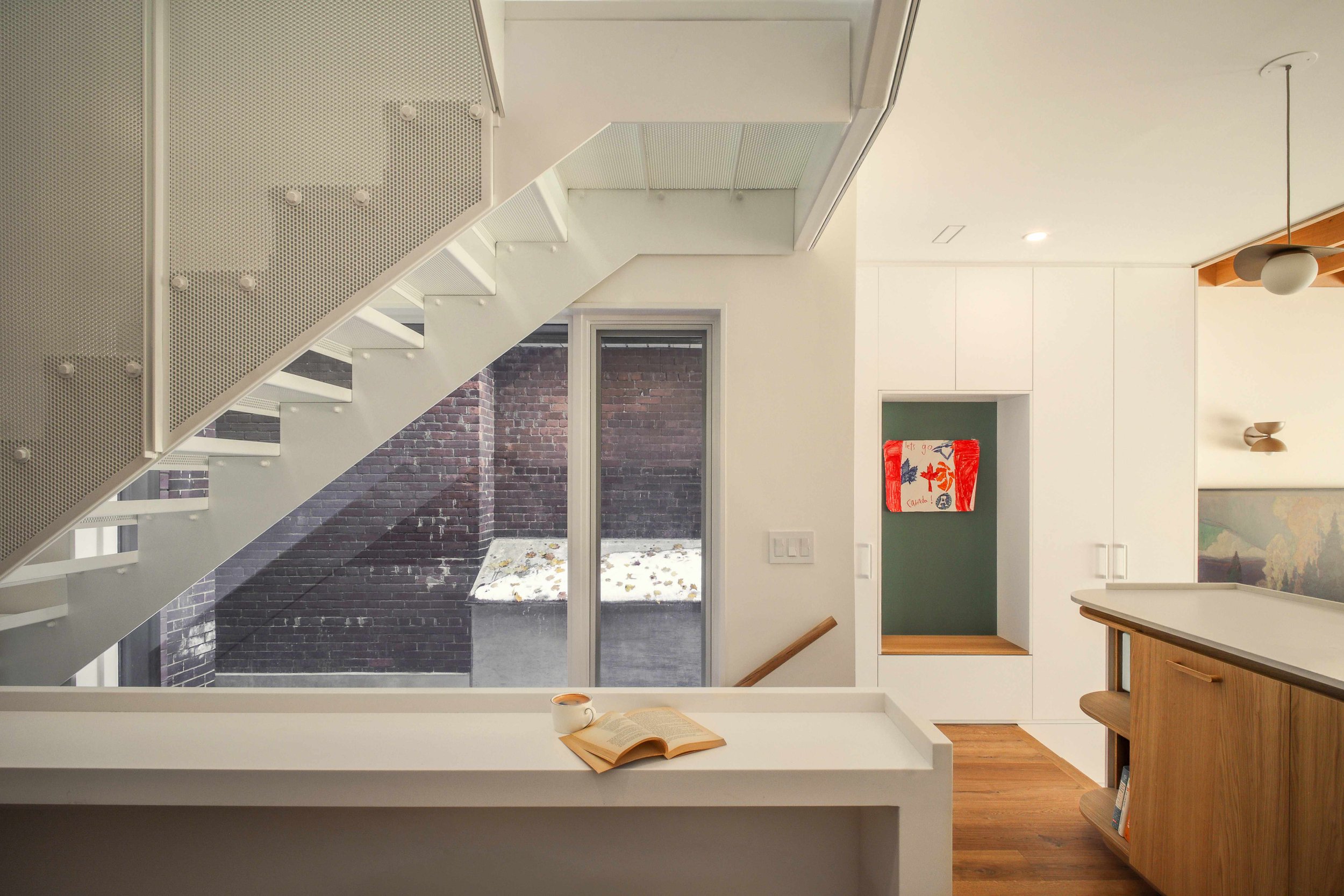
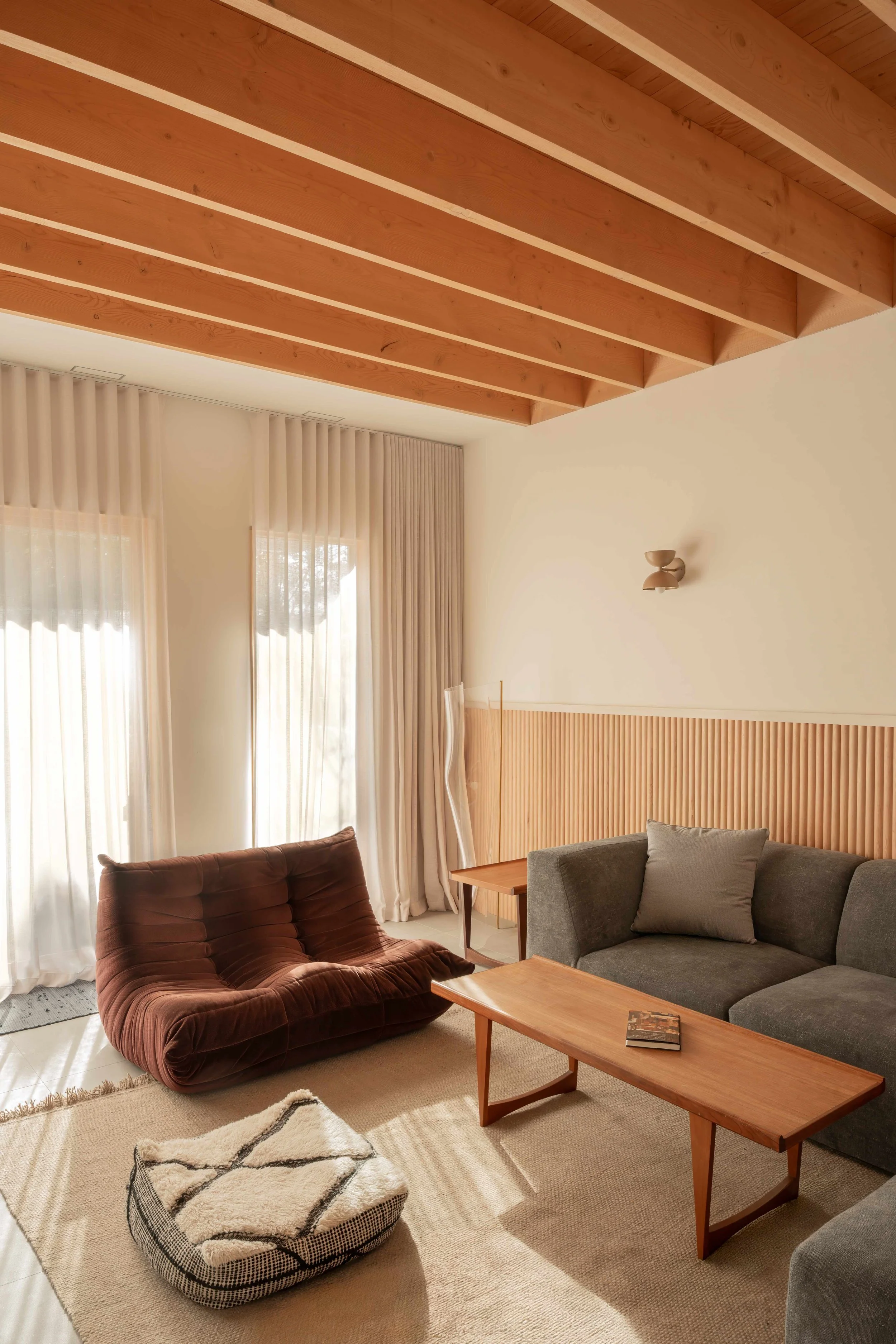
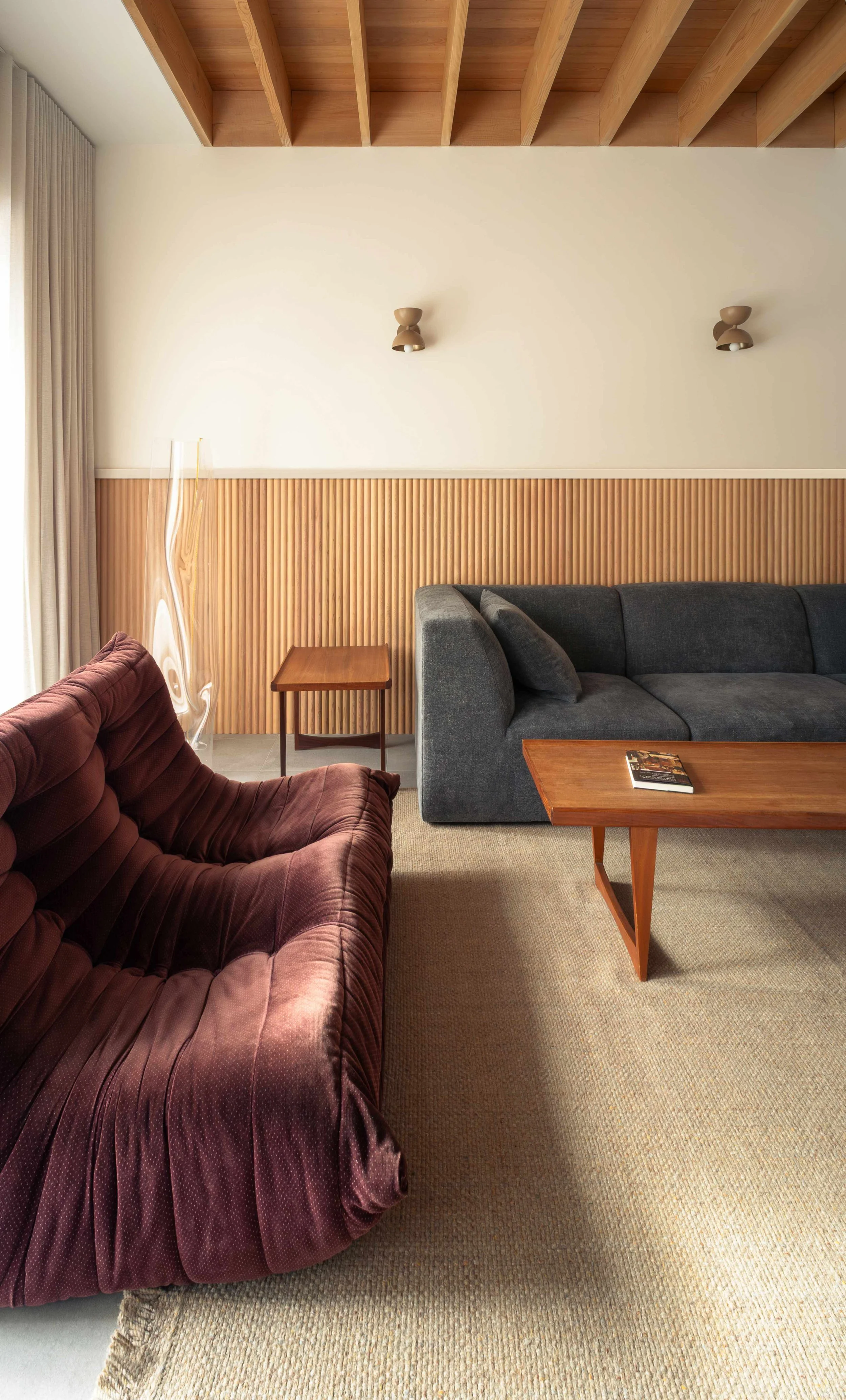
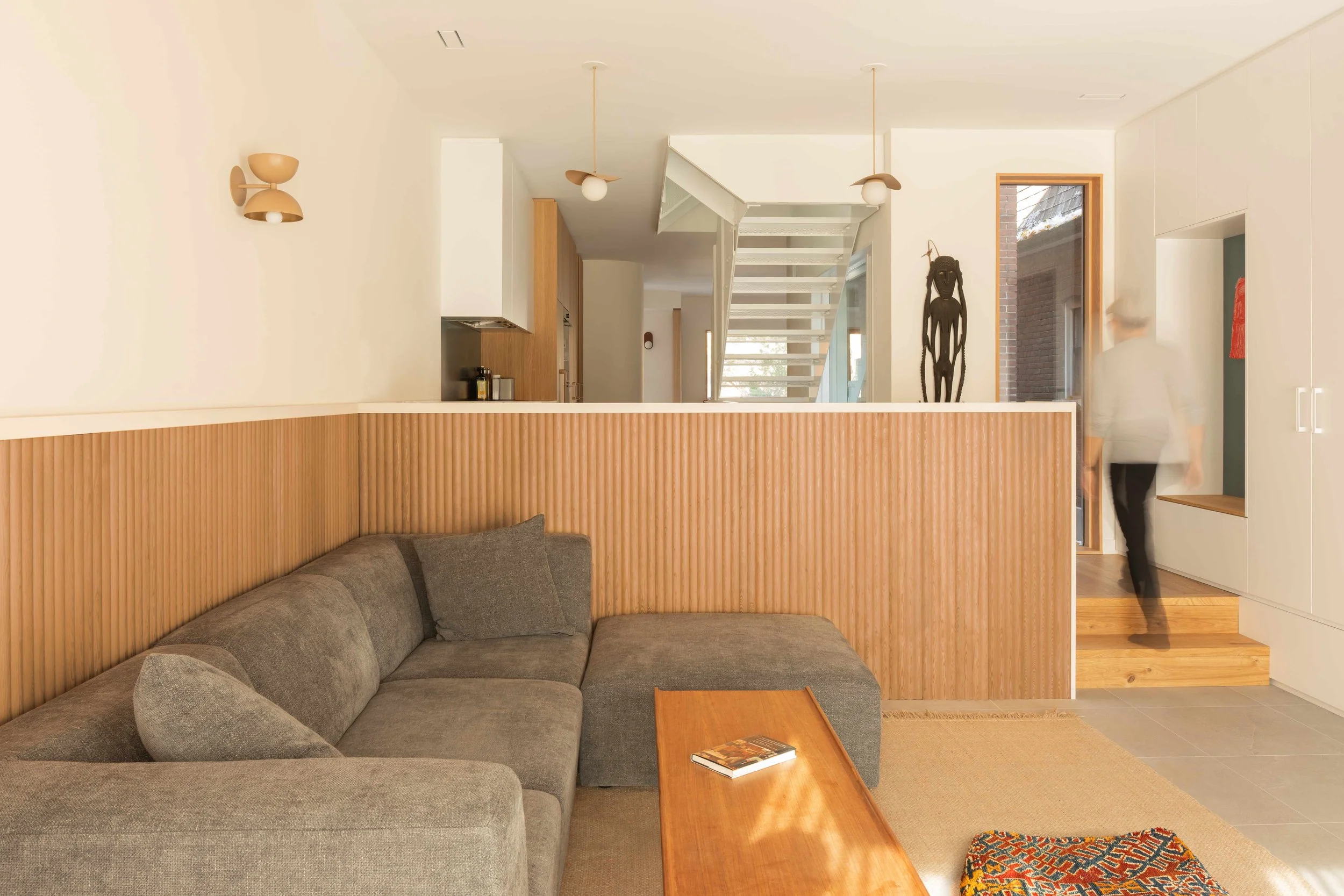
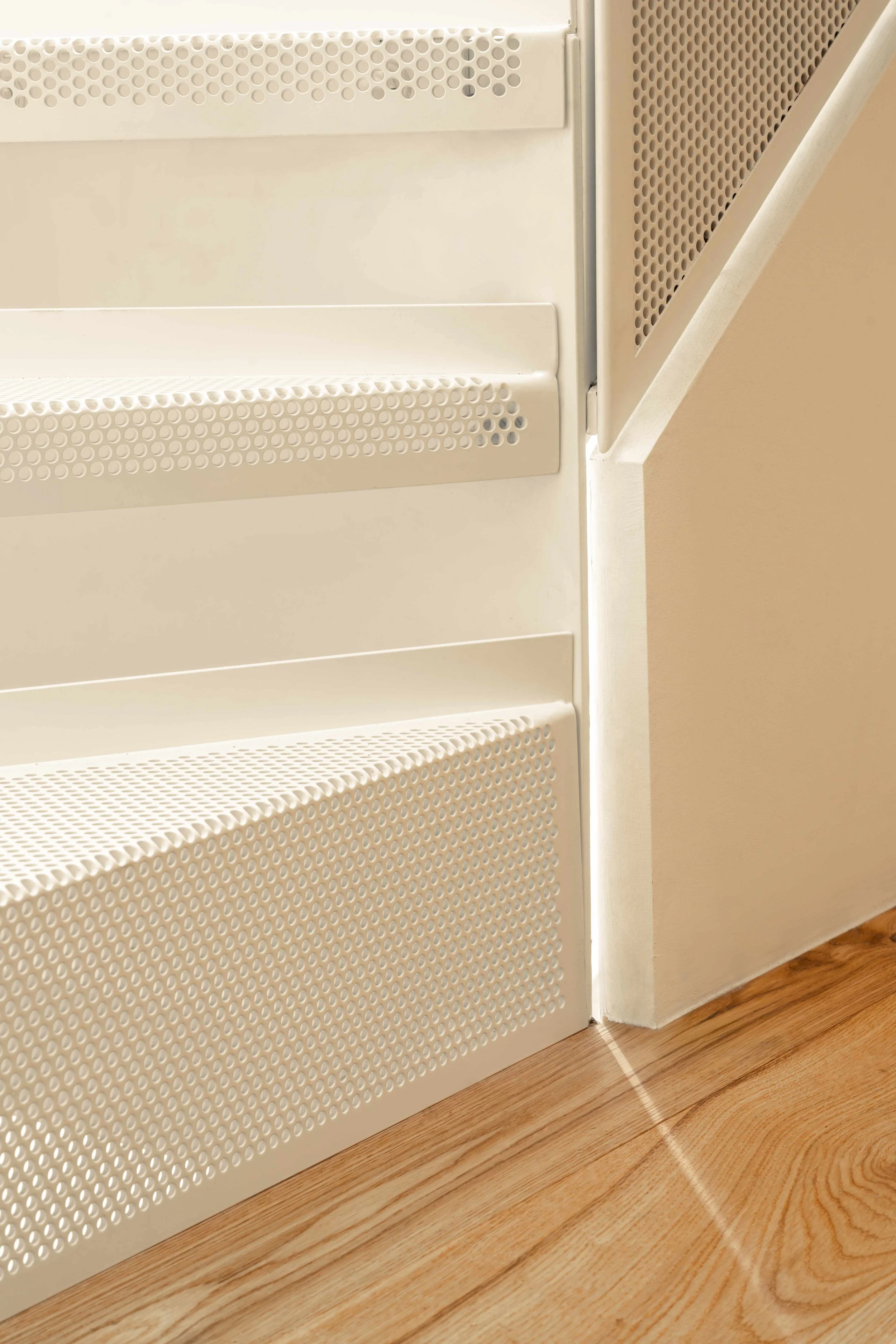
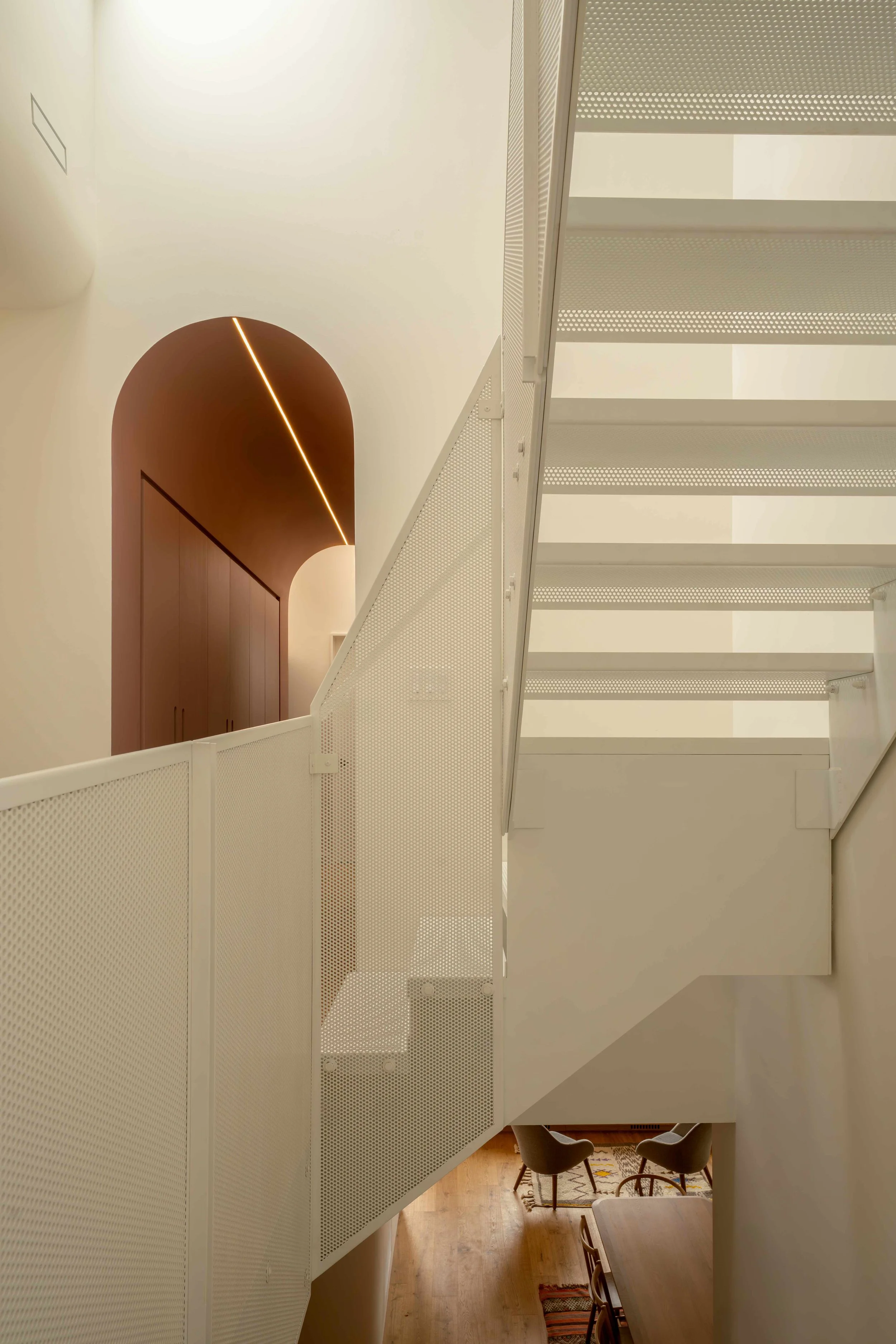
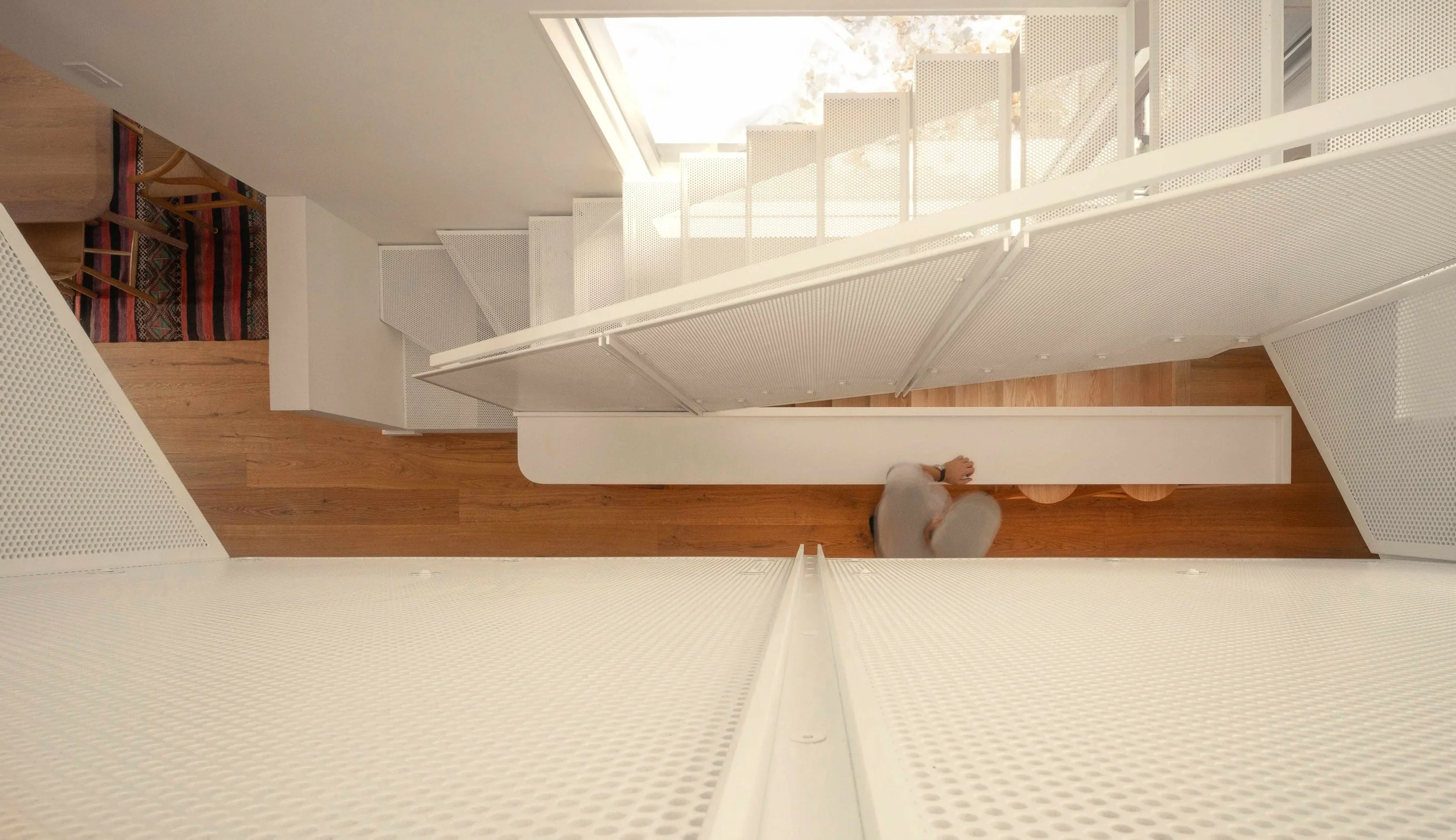
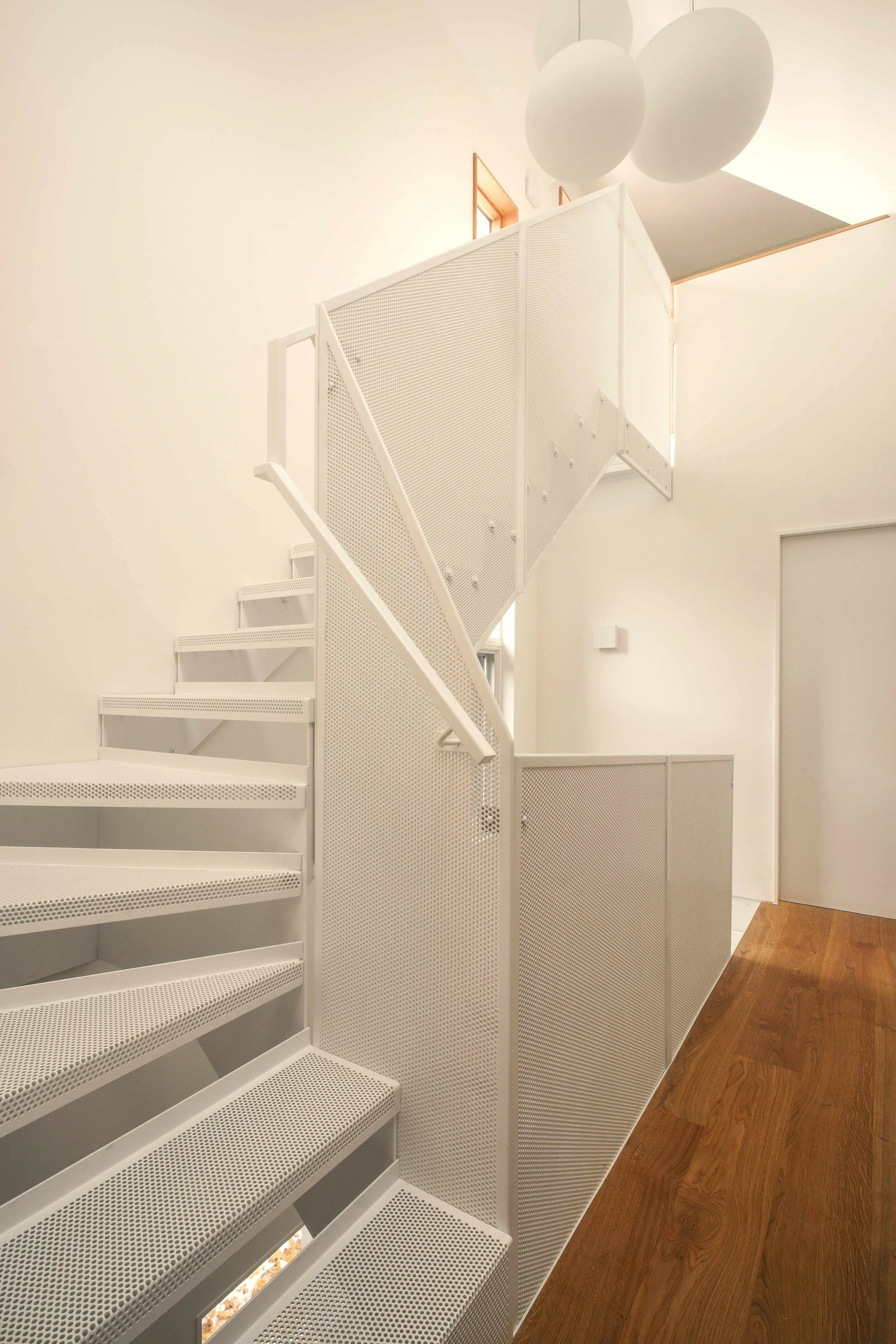
A formal lounge with custom seating anchors the front half of the house, designed for hosting and quieter gatherings. The central dining area with a large dining table leads seamlessly into the kitchen, which forms the spatial and social heart of the home. This space is defined by a dramatic three-storey light-filled atrium, where a floating perforated metal staircase links all floors both vertically and visually. Daylight pours in from east-facing glazing and west-facing roof window, creating a shifting play of light—particularly in the morning, welcoming early risers with warmth and openness.
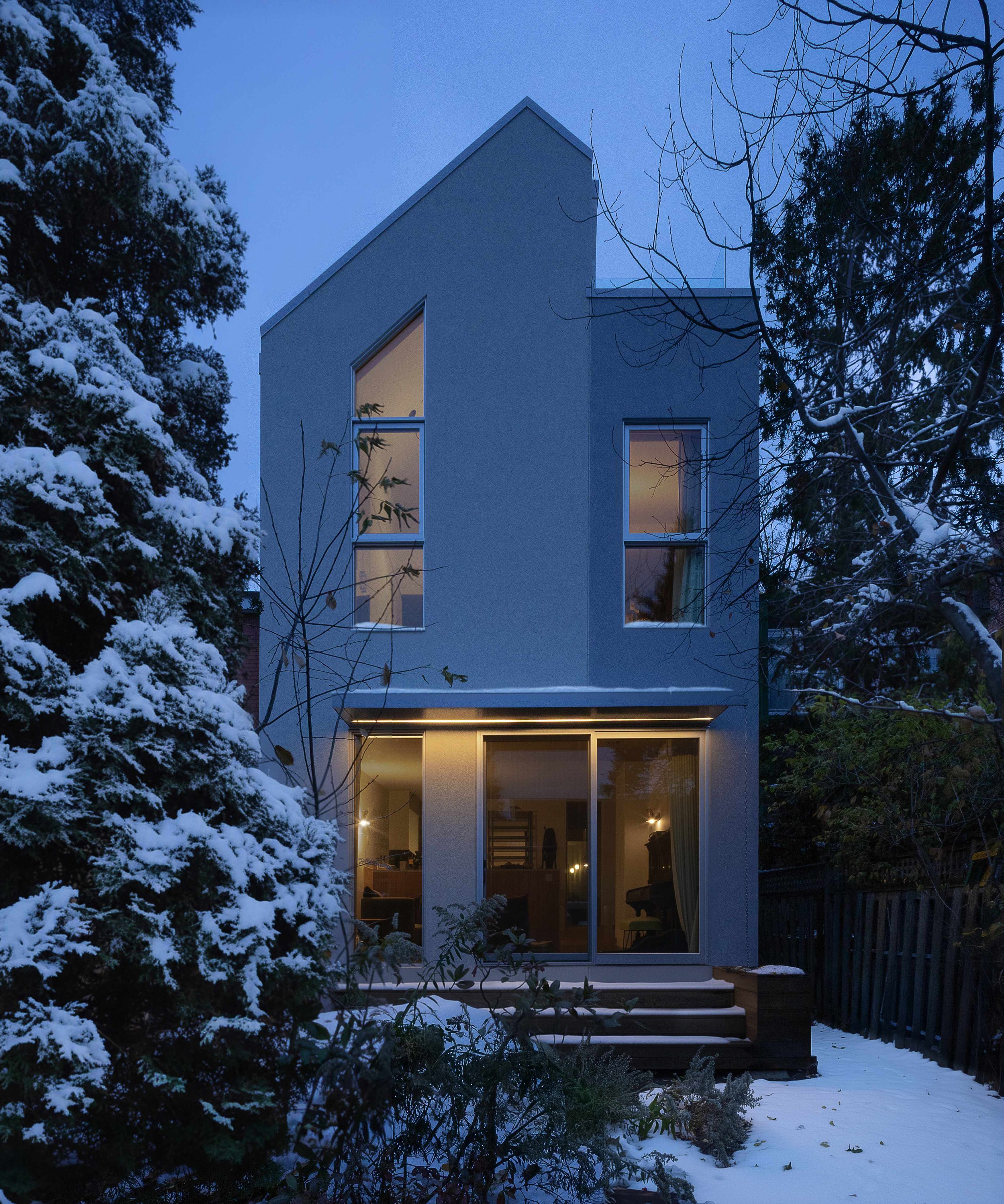
The kitchen acts as both a connector and a divider—linking the front and rear halves of the home while offering distinct zones for adults and children to gather. Multiple seating options—including a long breakfast bar and a cozy built-in nook beside a full-height window—create places for conversation, observation, and relaxation. A peninsula with an integrated sink opens toward the south-facing family room, where a piano anchors the space and a generous sectional sofa encourages informal gathering. Large sliding doors connect this room to the backyard, where steps lead down to a paved patio—creating a seamless link between inside and out.
Behind the breakfast bar, a stair leads discreetly down to the basement, which houses utility rooms, a recreation room, and a full bathroom - a flexible zone that can evolve over time into a playroom, guest suite, or home office.
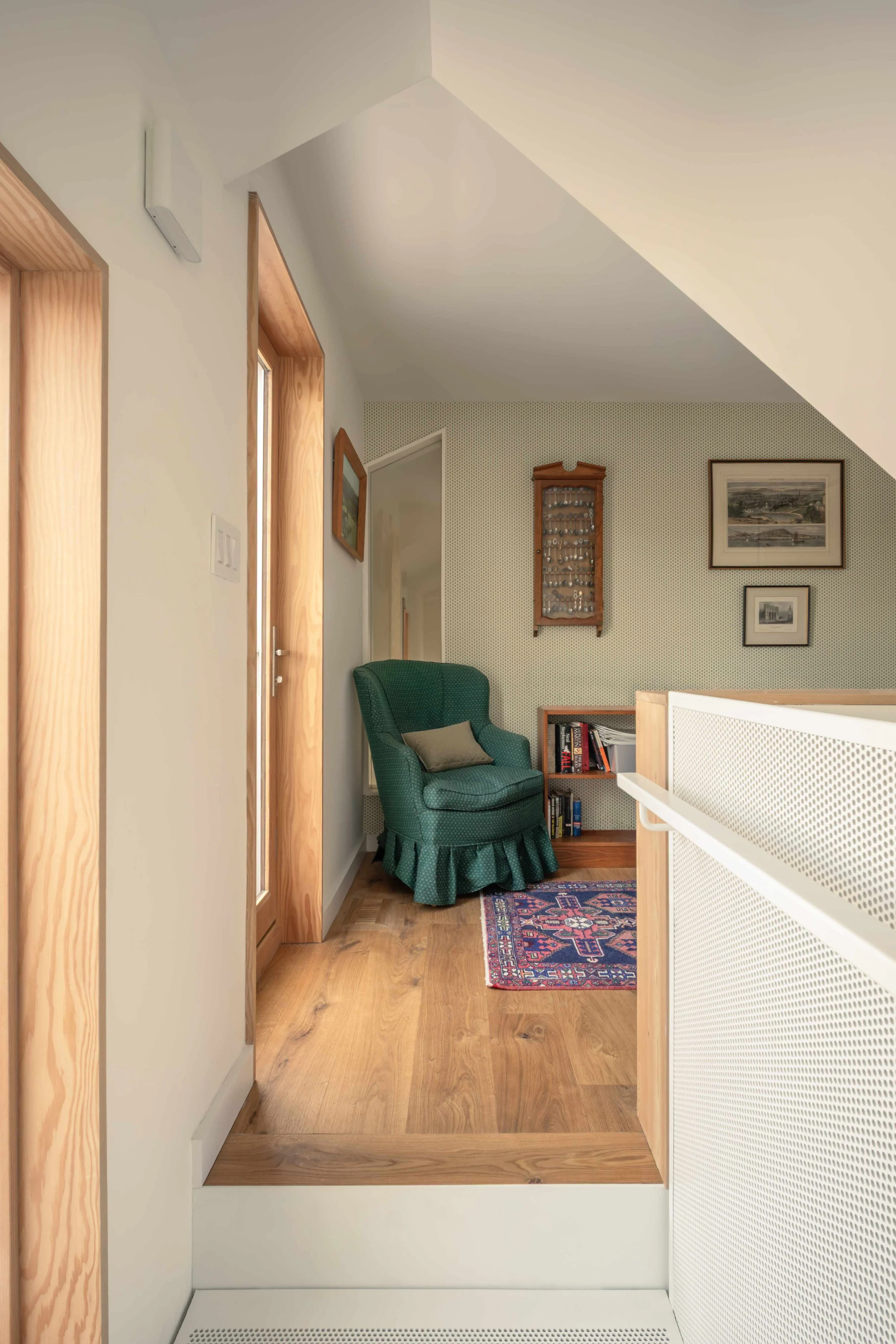
On the second floor, private family spaces are organized around the central atrium, with a reading nook and a built-in bench providing a moment of stillness. Narrow, compressed hallways open dramatically into double-height spaces, offering spatial contrast and surprise.
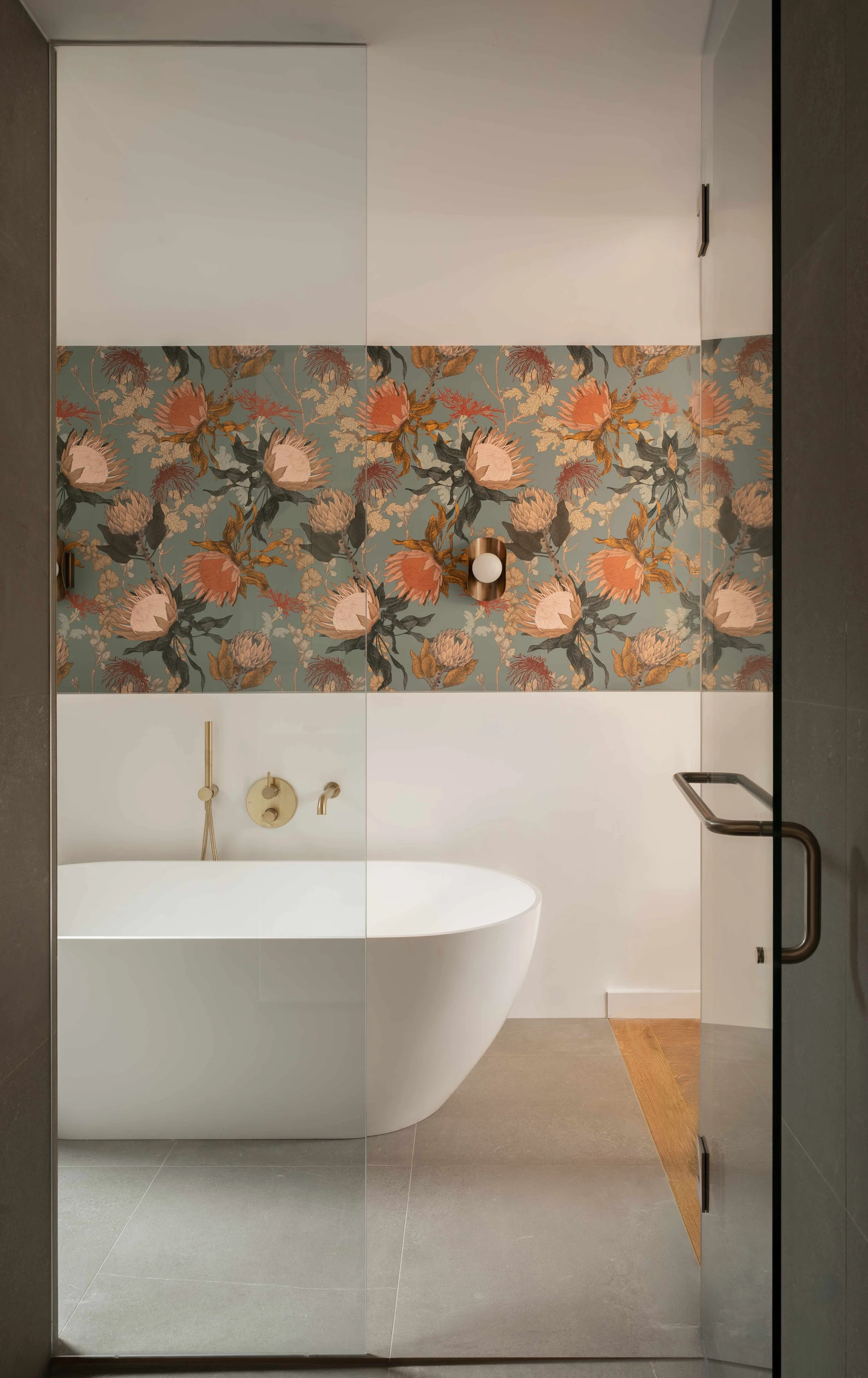
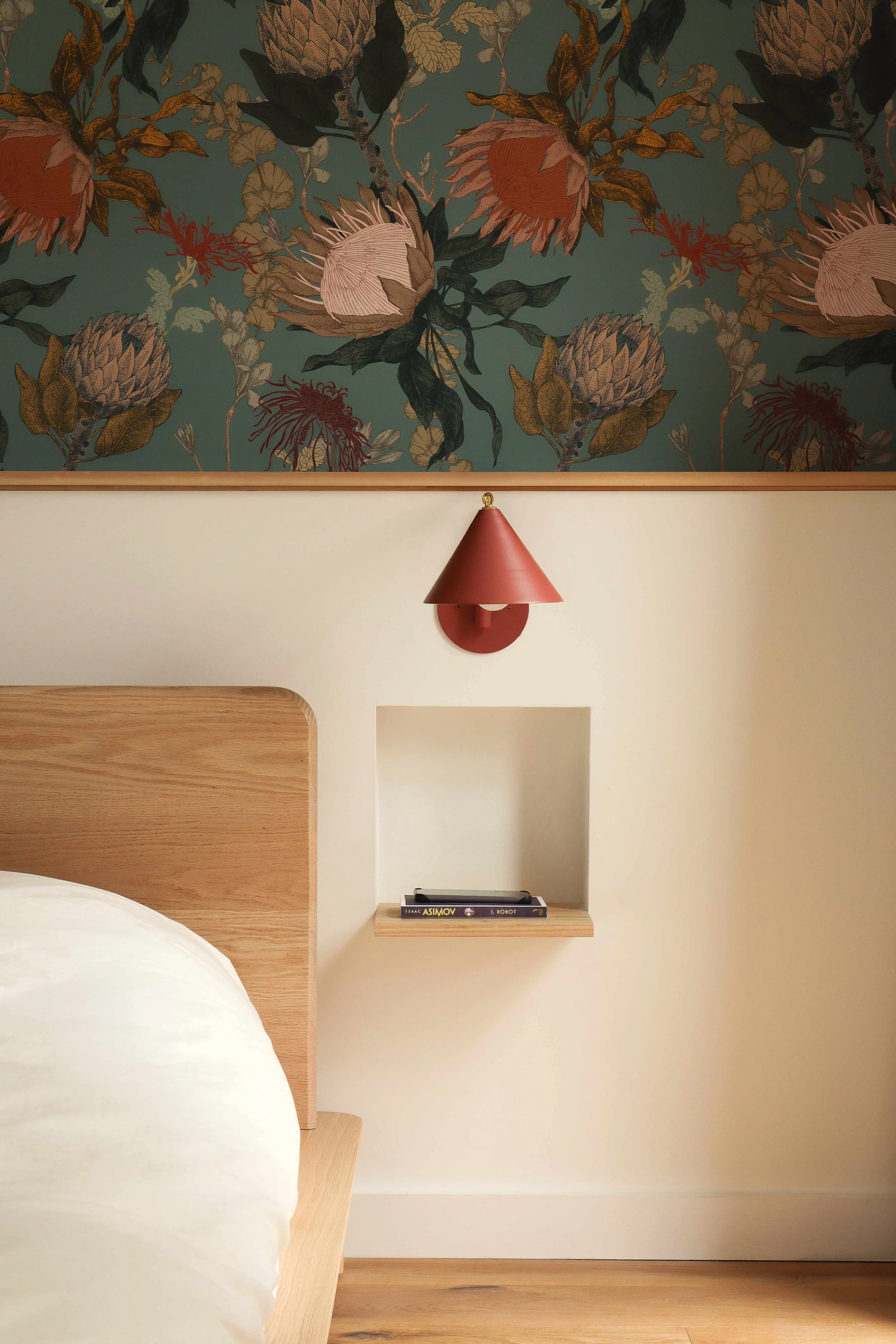
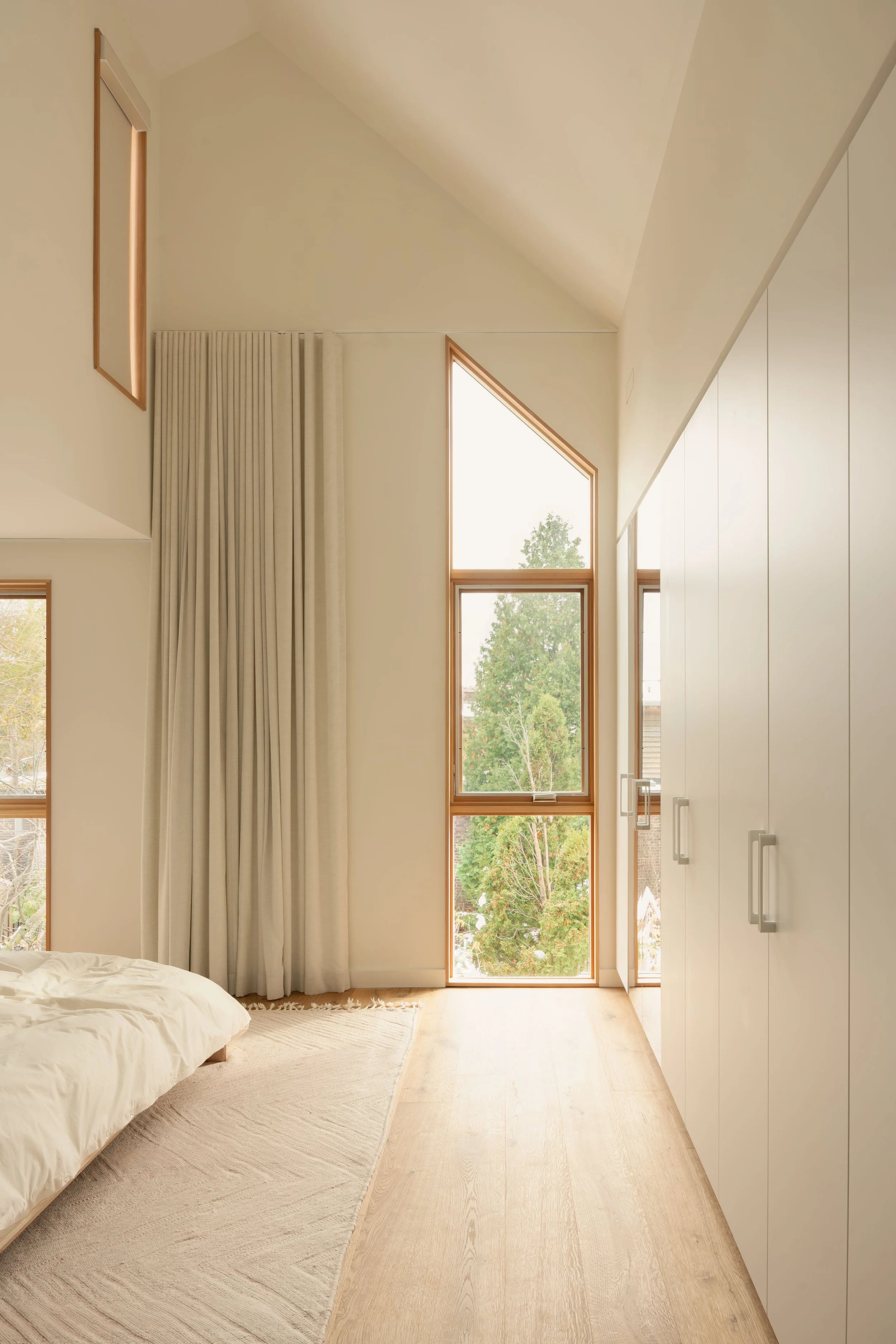
The primary suite is located at the rear, within the new addition. A dramatic vaulted ceiling floats above the main space, while a lowered zone introduces a sense of intimacy and spatial contrast. Windows on three sides offer varied light conditions throughout the day and curated views- both to the exterior and into other areas of the home. The four-piece ensuite bathroom includes a large soaker tub, strategically positioned to allow views in multiple directions, along with a separate water closet and ample built-in storage, completing this calm and private retreat.
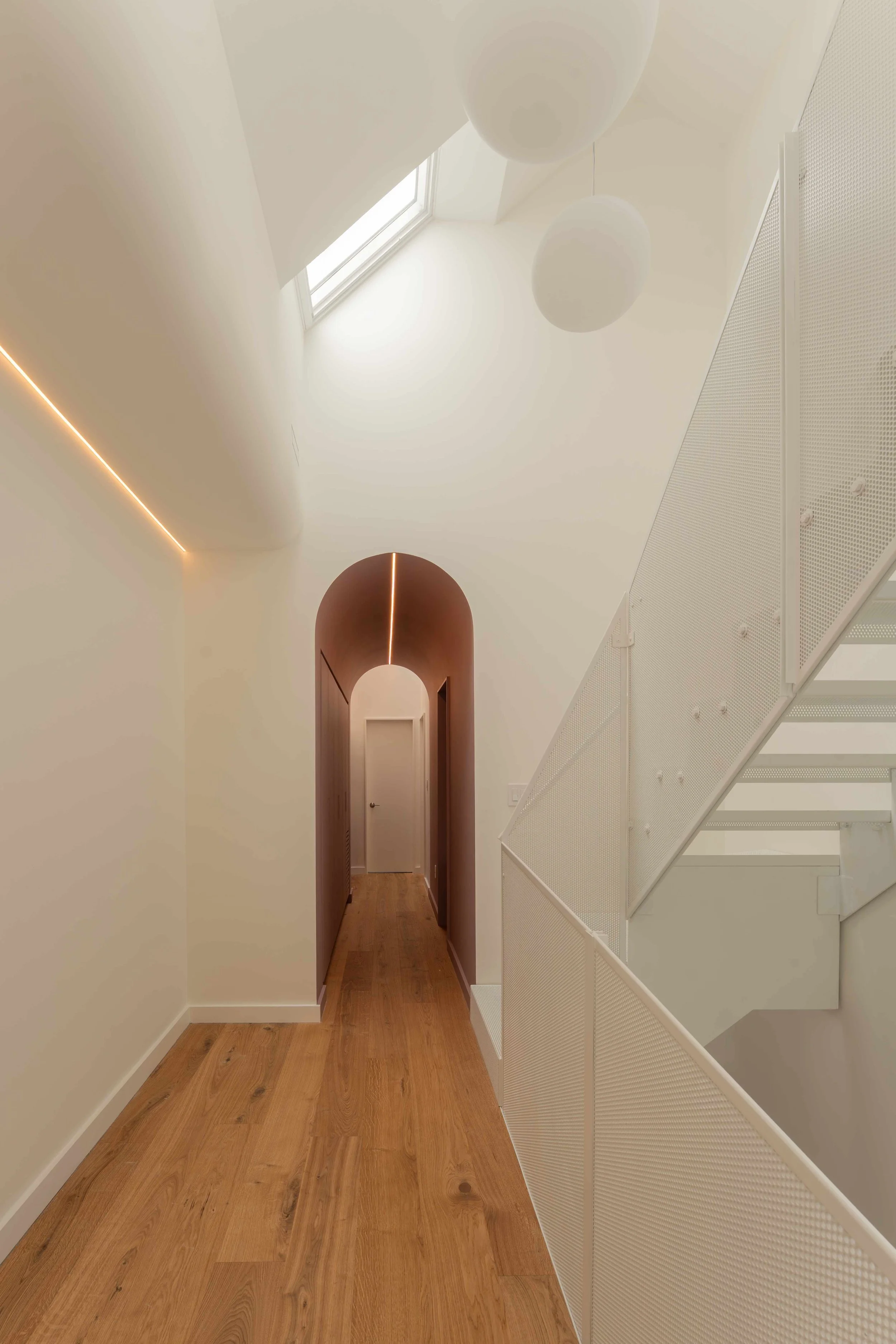
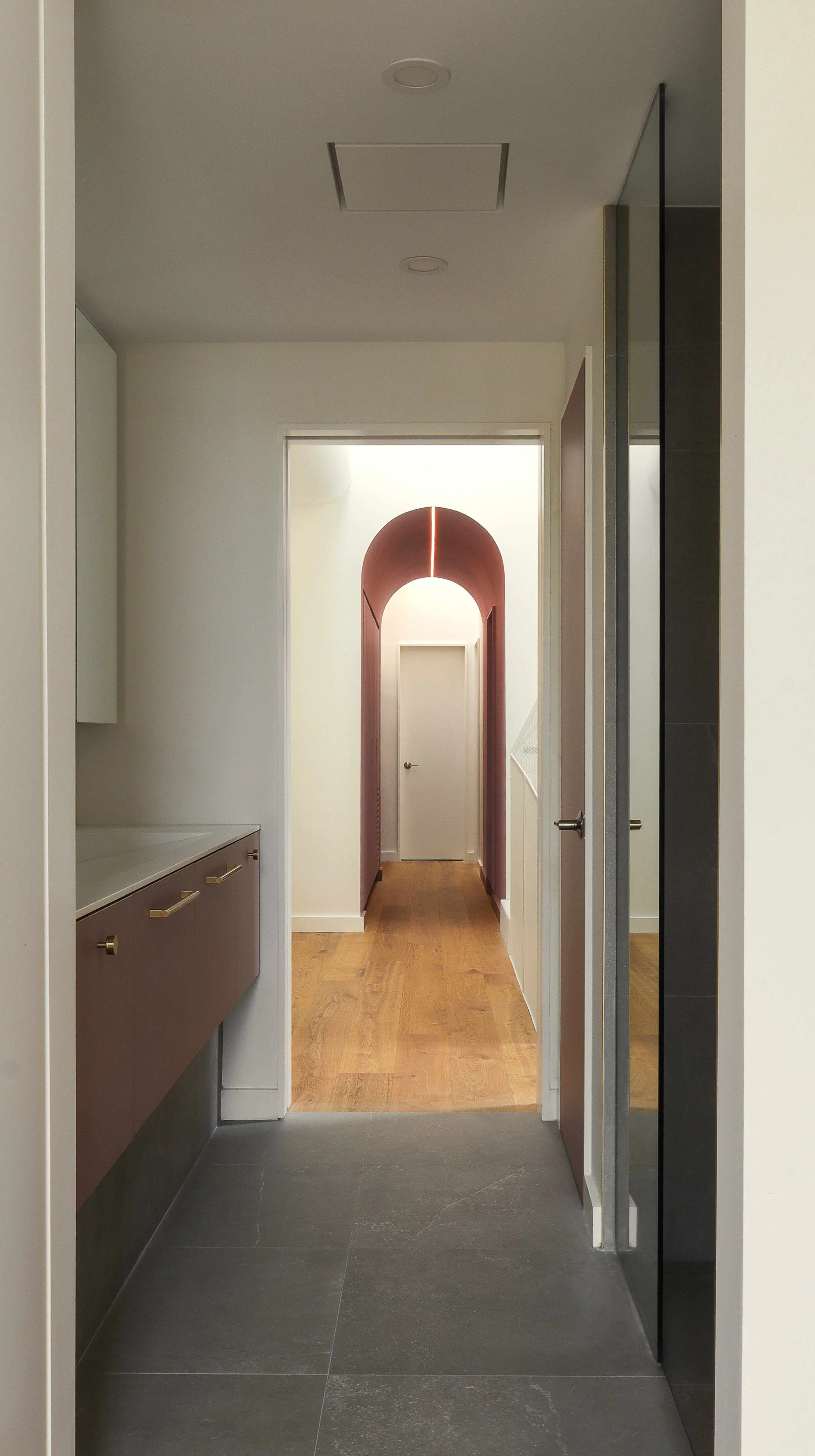
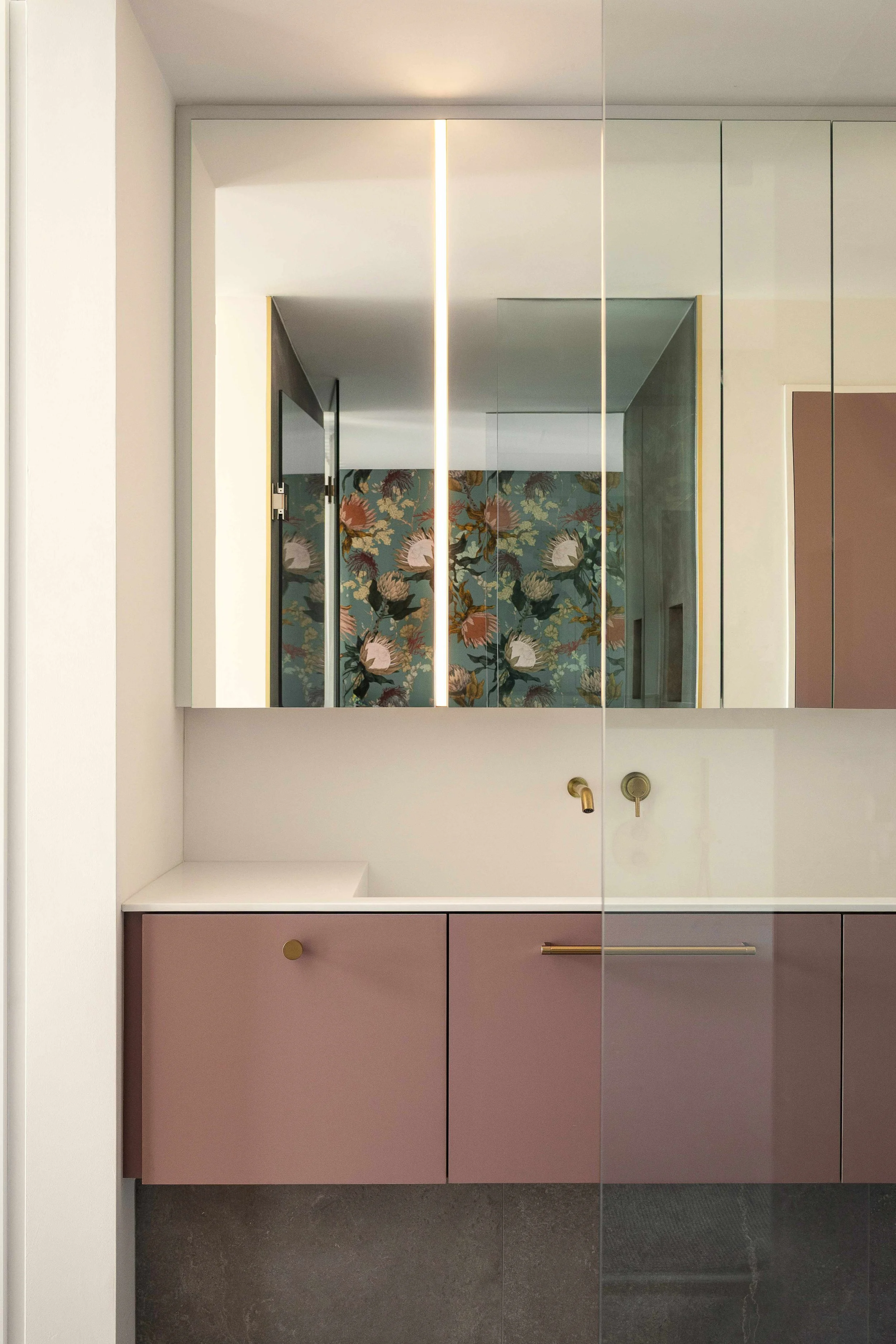
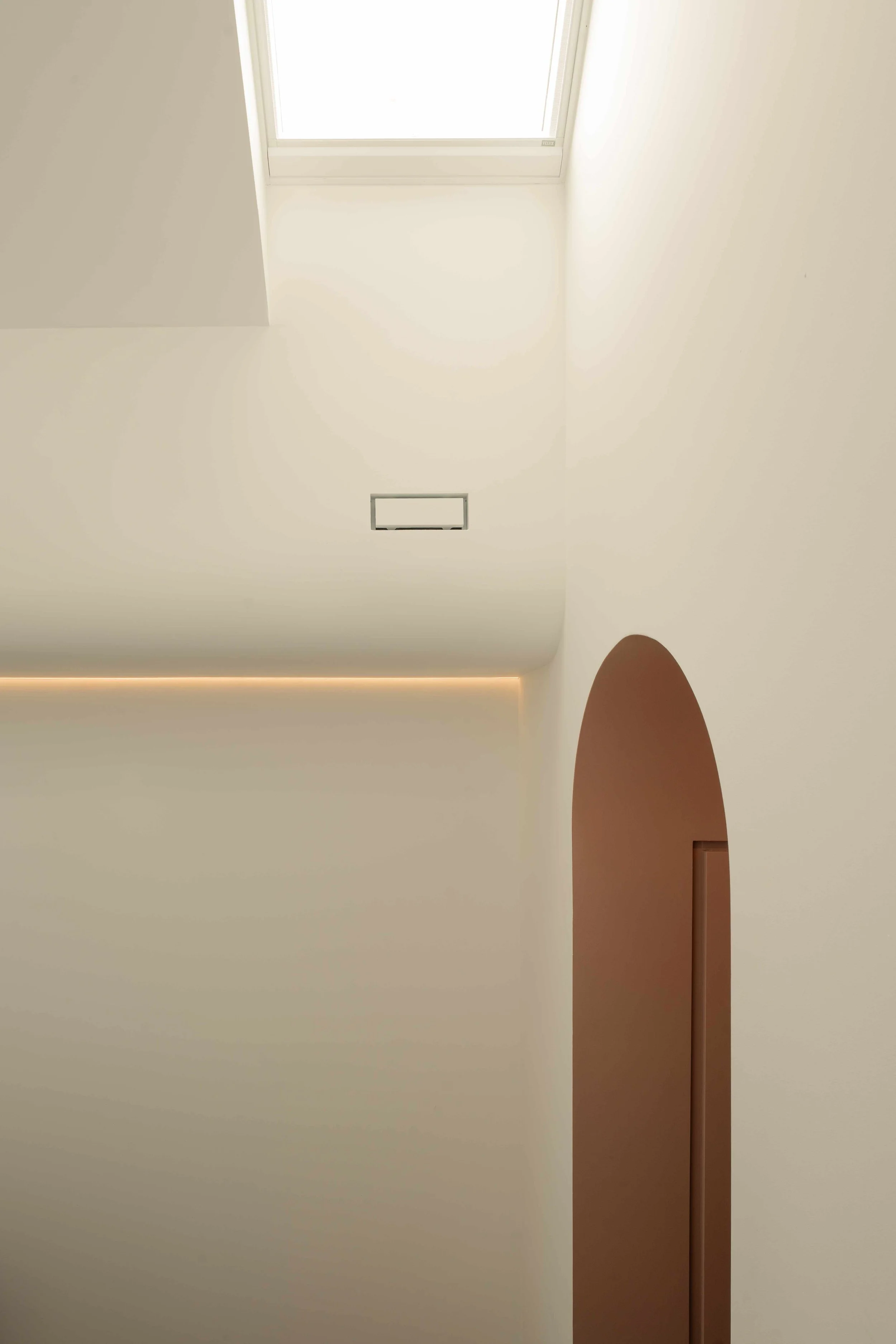
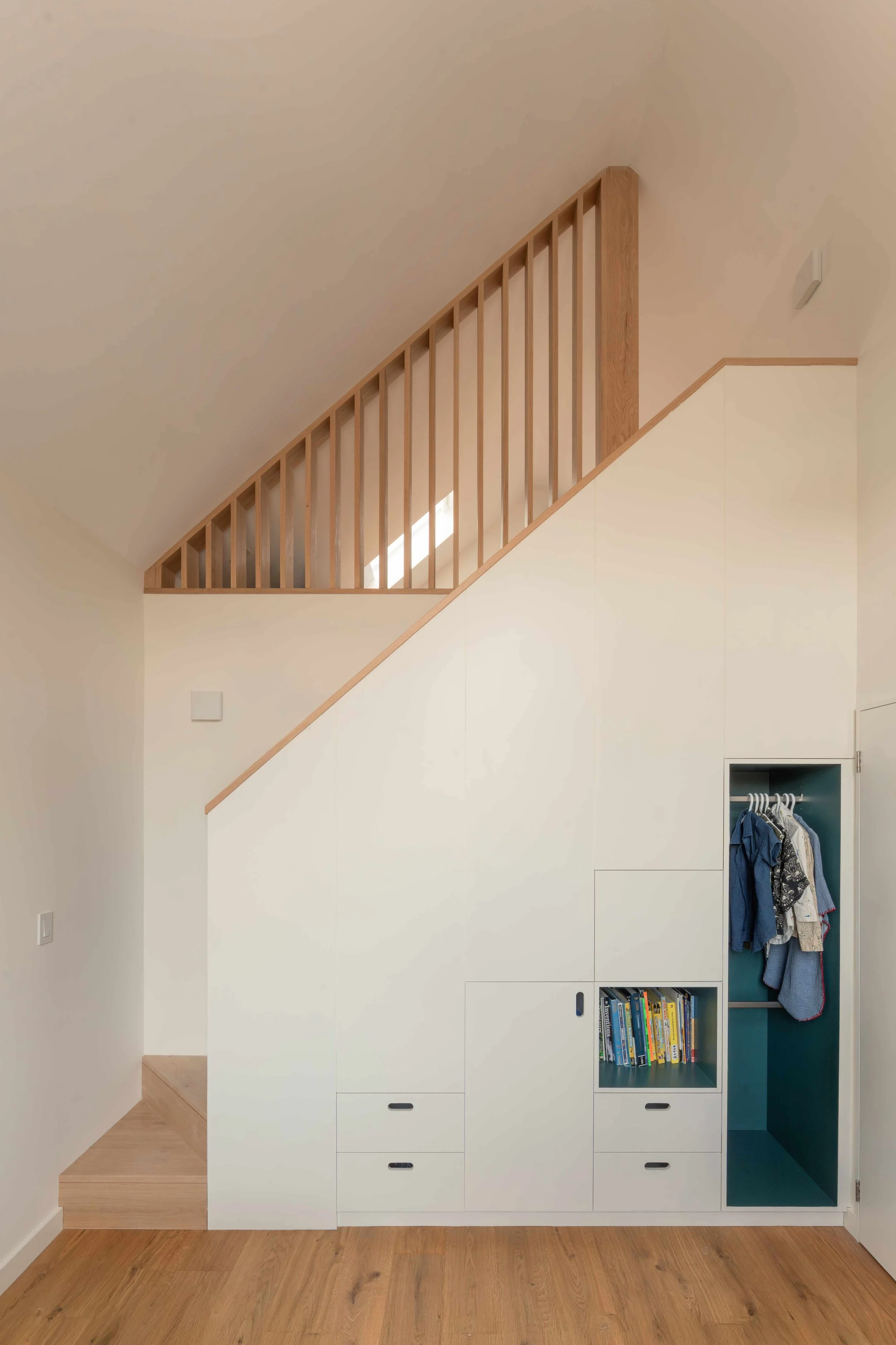
At the front of the house, a rose-colored hallway with a low, arched ceiling leads to the owner’s office and a shared bathroom. The hallway opens into a small vestibule beneath a double-height space, where a funnel-shaped opening and a strategically placed skylight draw the eye upward toward the sky. This moment signals the transition into the child’s realm—a lofted bedroom with a hidden staircase integrated into the closet millwork, leading to a private attic playroom tucked beneath the sloped roof, forming a whimsical and imaginative retreat that is both secretive and connected.
Above the primary suite, the converted attic holds a quiet study nook with views into the atrium and access to an east-facing roof terrace. This outdoor space offers panoramic views of the backyard and the city, serving as a peaceful escape for work and reflection.
The selected materials throughout the home reflect the project’s core themes of contrast and dialogue. Historic brick and warm wood are paired with contemporary stucco and stark metal, creating a rich, tactile tension between old and new. The perforated metal stair within the central void, along with the varied ceiling heights and carefully curated views throughout the home, become defining architectural elements shaping the home’s identity without overwhelming it.
Junction Triangle House exemplifies how a neglected historic home can be respectfully transformed into a flexible, light-filled, and future-proof residence. The design bridges past and present—restoring the structural integrity of a 19th-century building while enhancing its ability to serve a modern, evolving household. With a strong connection to the rear garden, a vibrant and social main floor, and distinct private quarters above, the home is ready to adapt and grow with the family for decades to come.